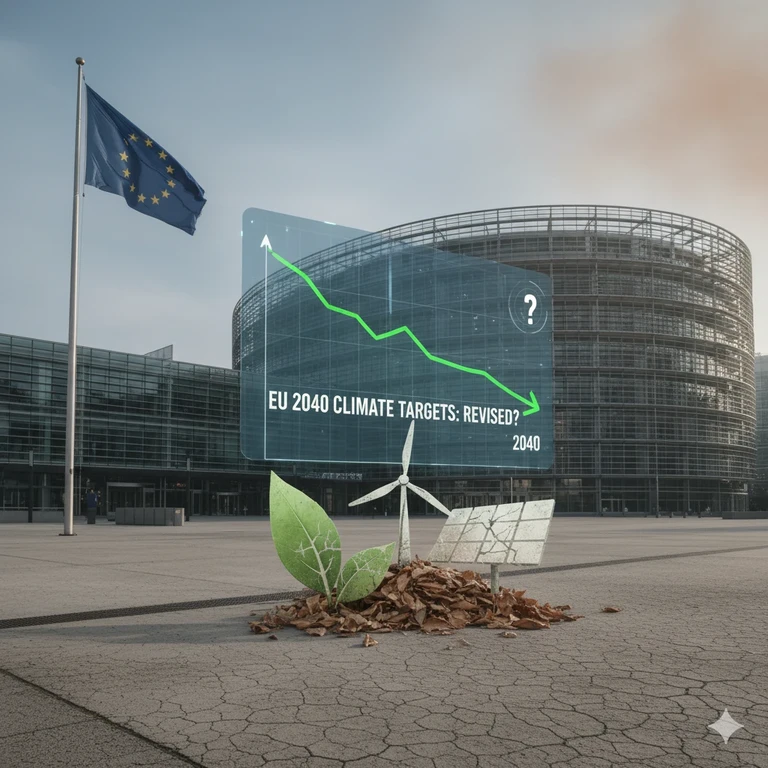
The European Commission had previously recommended reducing greenhouse gas emissions by 90% by 2040, but the new draft seen by Reuters introduces a flexibility clause. It states that if forests and other land-based carbon sinks fail to absorb the required amount of CO₂, the EU could propose an adjustment to the 2040 interim target in line with the potential shortfall.
The draft also indicates that Brussels may implement additional measures to support the forestry sector and get it back on track to meet emissions targets.
These changes are based on a proposal from France last week, which called for an "emergency brake" allowing the emissions reduction target to drop from 90% to 87% if forests and land-use sectors fail to meet their obligations.
Reports indicate that Europe’s forests have absorbed about one-third less CO₂ over the past decade, due to increased wildfires and unsustainable management practices. Previous drafts had suggested reviewing the 2040 target every two years, providing the EU with additional flexibility to adjust future commitments.
Ministers will discuss key issues at the Tuesday meeting, including the 90% reduction quota that countries may cover by purchasing foreign carbon credits, with approval of the target requiring support from at least 15 of the 27 EU member states.
A spokesperson for Denmark, which holds the EU’s rotating presidency and drafted the document, said that “all essential components are now ready to reach an agreement.”
In addition to the EU, countries worldwide will present updated climate plans at the COP30 summit in Belém, Brazil, as part of their Nationally Determined Contributions (NDCs) under the 2015 Paris Climate Agreement. These plans outline how countries will reduce greenhouse gas emissions and adapt to climate change, aiming to limit global temperature rise to below 1.5°C, with the agreement requiring countries to update their NDCs every five years to gradually increase climate ambition.