Standing on the shore of the village of Ghannouch, located on the Gulf of Gabes in southeastern Tunisia, fisherman Sadeq Al-Ghoul remains steadfast in his trade despite the heavy toll that chemical leaks from the nearby chemical complex have taken on the people, the sea, and marine life.
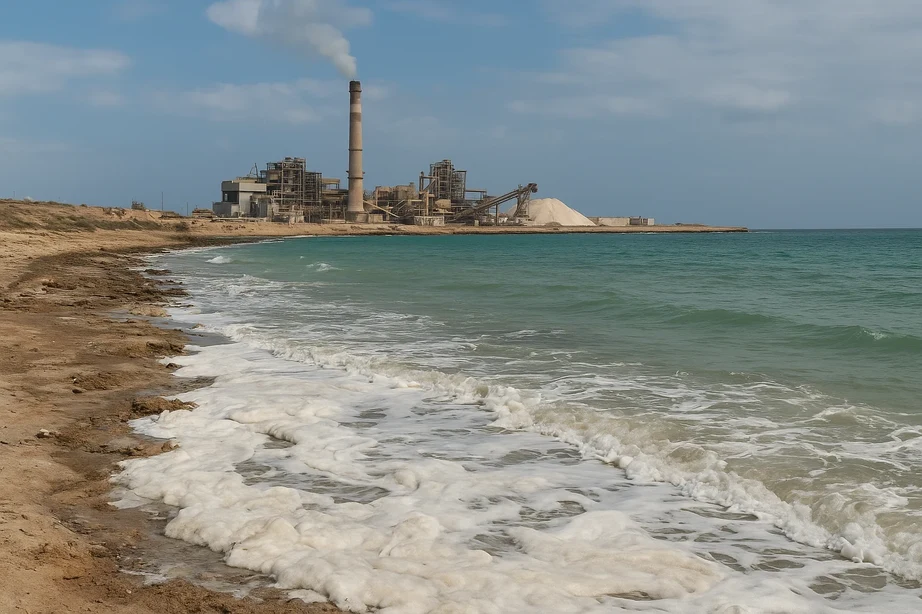
He points toward the sea, where white toxic waves—waste from phosphogypsum—are clearly visible, explaining how these chemical discharges have devastated both the environment and local residents. “Here, there is no life,” he says bitterly, “only pollution, disease, and suffocation from toxic air.”
Al-Ghoul adds that the complex also releases acid and ammonia without any treatment, both being corrosive substances that cause eye irritation, severe allergies, and various diseases. They also destroy vegetation and marine life, and many residents have developed chronic illnesses as a result. He accuses the plant’s management of taking advantage of weak oversight to dump toxins into the sea without regard for the harm inflicted on locals and fishermen.
The Phosphate Curse in Gabes
Located about 415 kilometers southeast of Tunis, the Gabes Governorate has long suffered from the pollution caused by the chemical complex in Ghannouch, established in 1972. Although authorities have repeatedly promised to close the plant—most notably since 2017—those promises remain unfulfilled.
For decades, the complex has emitted toxic fumes and phosphate waste into the air and sea, leading to a sharp rise in respiratory, skin, and cancer-related diseases, along with birth defects and kidney and liver problems, according to several studies and reports. However, official data on these impacts remains scarce.
It is estimated that the plant produces around 6,000 tons of phosphogypsum waste every day, much of which is discharged directly into the sea without treatment, particularly near Shatt Al-Salam beach. This has caused severe marine pollution and the collapse of fish stocks in the Gulf of Gabes, according to locals, fishermen, and numerous national and international reports.
Inspections and Empty Promises
Repeated protests over suffocation incidents and worsening pollution prompted a joint committee from the Ministries of Health, Industry, and Environment to visit the complex in late September in an attempt to calm public anger. Environmental activists reported that during the visit, the plant’s management temporarily halted the most toxic production units, while the Ministry of Health deployed emergency medical equipment to address the rising number of respiratory distress cases.
While the plant’s officials remain silent and avoid media statements, President Kais Saied referred to what he called an “environmental assassination”, saying that all forms of life in Gabes had been destroyed. Yet, according to environmental activists, no concrete action has been taken to stop the ongoing environmental disaster.
The chemical complex in Gabes stands as a stark example of Tunisia’s painful economic choices since the 1970s—prioritizing profit over human health and the environment. Though it provides about 4,000 jobs, it continues to pose a major environmental threat. Residents, weary of unkept promises, are increasingly leaving the area in search of clean air and a better life for their children—still waiting for a solution that has yet to come.