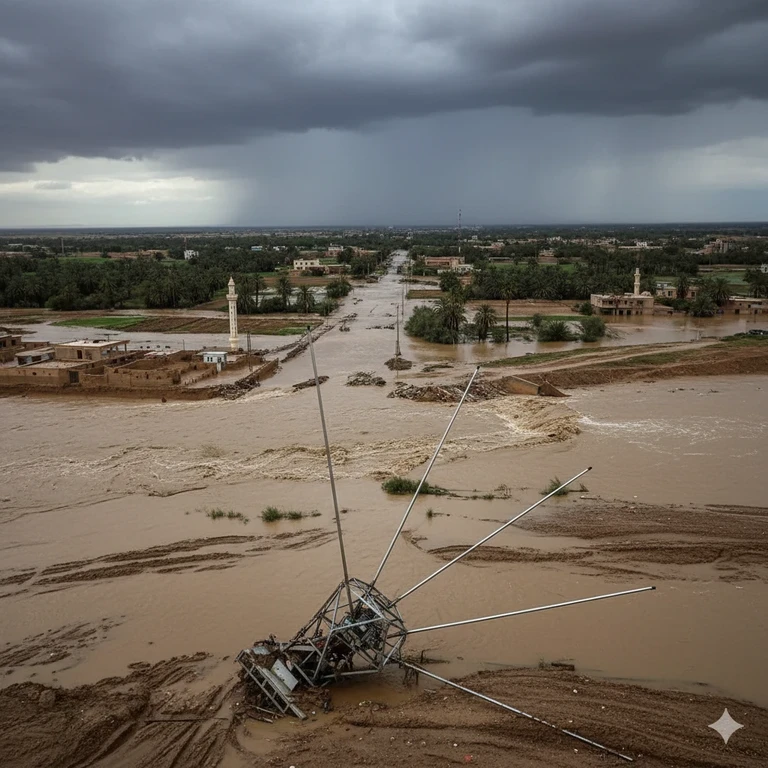
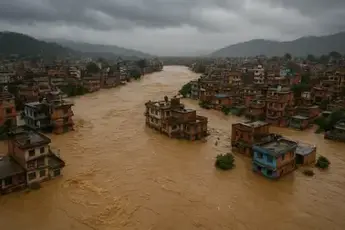
Heavy rainfall caused flooding in several areas of western Iran on Monday, following months of severe drought that led to the country’s worst water crisis in decades and prompted authorities to begin cloud-seeding operations earlier this week.
The Iranian Meteorological Organization issued warnings of floods in six western provinces, noting that rain is expected in 18 of Iran’s 31 provinces.
Since shortly after midnight, most provinces have experienced heavy rainfall accompanied by warnings of flash floods and rising river levels. According to the IRNA news agency, some areas in Lorestan province witnessed flooding, prompting authorities to take precautionary measures to prevent material and human losses and to warn residents to avoid flood-prone slopes and stay away from rivers.
Snowfall was also reported in high-altitude and mountainous regions, along with hailstorms in some areas. In Chaharmahal and Bakhtiari province, residents of seven villages were evacuated to safe areas amid concerns about potential flooding. The Meteorological Organization expects rainfall to continue across much of the country until tomorrow.
Iran has been suffering from severe drought in recent years, with rainfall levels dropping by about 85% compared to the national average. This has depleted water reservoirs and caused supply cuts in several areas, including parts of Tehran. The crisis has been worsened by poor water management, illegal well drilling, inefficient agricultural practices, and the effects of climate change.
Prolonged drought conditions also increase the likelihood of flooding, as dry soil loses its ability to absorb water effectively.
Authorities announced two days ago that the first cloud-seeding operation of the year was carried out over Lake Urmia basin in the northwest, near the regions that later experienced flooding. Cloud seeding involves dispersing substances into clouds to stimulate rainfall, but it remains a temporary solution and can only be used under suitable environmental conditions.
Sahar Tajbakhsh, head of the Iranian Meteorological Organization, stated that cloud-seeding is costly and that the amount of rainfall it produces is far from enough to solve the country’s water crisis. A report by the Young Journalists Club noted that current conditions are not suitable for cloud seeding over Tehran, which officials warn could become uninhabitable if the ongoing drought continues.