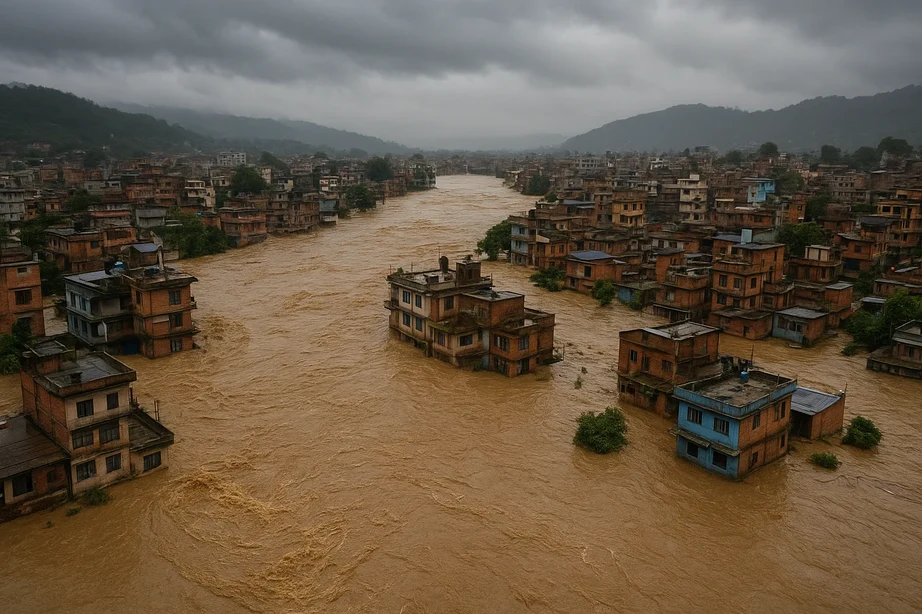
Indian authorities announced that continuous heavy rainfall has triggered floods and landslides in the mountainous Darjeeling region of eastern India, killing at least 18 people after sweeping away homes, roads, and bridges. Meanwhile, the death toll in neighboring Nepal has risen to 50.
Local officials in West Bengal state said on Monday that several people remain missing, warning that the death toll could rise as more reports arrive from remote areas.
Mamata Banerjee, the state’s Chief Minister, confirmed in a post on “X” that two iron bridges collapsed and several roads and vast areas of farmland were submerged. She noted that the districts of Darjeeling, Kalimpong, Jalpaiguri, and Alipurduar, known for their tea plantations, were among the most affected.
H.R. Biswas, head of the regional meteorological department in Kolkata, said that more rainfall is expected following the “very heavy” downpours that hit Darjeeling over the weekend.
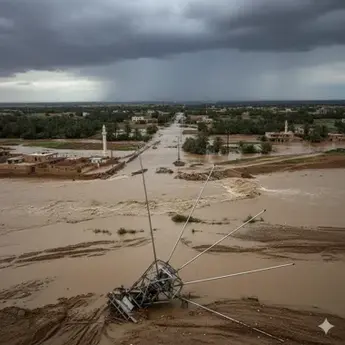
Traffic on major highways was disrupted after part of an iron bridge over the Balason River, connecting Siliguri in the plains with the hill town of Mirik, collapsed due to heavy rains. Many other roads were also washed away. A disaster management official reported that large amounts of debris have blocked roads, making it impossible for rescue teams to reach several remote locations.
The hill resort of Darjeeling, located in the Himalayas, is famous for its tea and scenic views of Mount Kanchenjunga, the world’s third-highest peak. Banerjee urged tourists to stay where they are until safe evacuation is arranged.
Across the border in Nepal, the death toll from floods and landslides has climbed to 50, including 37 deaths in separate landslides in the eastern Ilam district, near India. In southeastern Nepal, the water level of the Koshi River — which causes deadly flooding in India’s Bihar state almost every year — rose above the danger mark, prompting authorities to open all 56 sluice gates to release water, compared to only 10–12 under normal conditions. Vehicle movement across the bridge was also banned.
In Kathmandu, surrounded by hills, rivers overflowed, flooding many roads and homes, cutting off the temple-filled capital from the rest of the country by road.
Hundreds of people die every year in Nepal due to landslides and flash floods, which are common in the country’s mountainous terrain during the monsoon season — typically lasting from mid-June to mid-September.
Meteorological officials warned of more heavy rainfall across the Himalayan nation, while authorities said they are taking maximum precautions and emergency measures to assist those affected by the disaster.