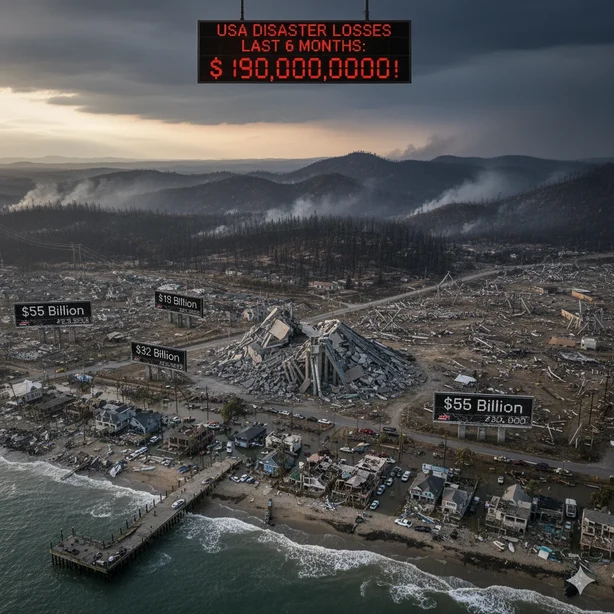
During the first half of 2025, the United States recorded its highest-ever losses from major disasters, driven by massive wildfires in Los Angeles and storms that affected much of the country.
In the first six months of the year, the U.S. experienced 14 separate weather-related disasters, each causing at least $1 billion in damages, according to estimates by the Climate Center. The total losses reached $101 billion, affecting homes, businesses, highways, and other infrastructure, marking the largest half-year losses since record-keeping began in 1980.
The wildfires in Los Angeles in January were the most costly, destroying around 16,000 buildings and killing approximately 400 people. With damages estimated at $61 billion, these fires represent the most expensive climate-related disaster in U.S. history and were the only event among the top 10 costliest climate disasters that was not a hurricane.
Data from the National Oceanic and Atmospheric Administration (NOAA) over the past 45 years show a rising trend in the costs of wildfires, storms, hurricanes, droughts, and floods, all of which have been exacerbated by human-induced climate change. The report notes that policies under former President Trump, which included laying off about 800 NOAA employees and closing key climate information platforms, contributed to the loss of critical data and expertise needed to respond to such disasters.
While information on billion-dollar disasters was available through the end of 2024, the Climate Center expanded the database to provide essential planning tools for cities and communities facing extreme weather risks.
The Center also highlights that the financial impact of disasters has escalated dramatically over the past four decades. Between 1985 and 1995, total disaster losses were $299 billion, compared to $1.4 trillion between 2014 and 2024.
Adam Smith, who previously led NOAA’s billion-dollar disasters project and later revived it at the Climate Center, emphasized that the data are crucial for the private sector, local communities, and academic research, noting that climate change increases the frequency and severity of extreme events.
The Climate Center’s initial update, completed in June, aims to fill the information gap and restore lost expertise and tools following NOAA’s closures. However, its latest report does not include the July floods in Texas, which claimed over 130 lives.
Experts point out that the absence of major hurricanes so far in 2025 is a positive sign, particularly given the dismantling of disaster response institutions during the Trump administration, including staff reductions at FEMA and shifting responsibility for major disasters from the federal government to the states.