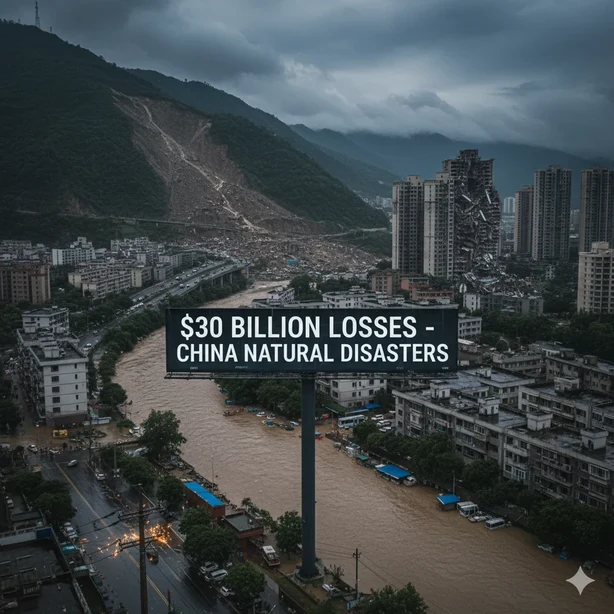
China’s Ministry of Emergency Management announced that natural disasters that struck the country during the first nine months of 2025 caused direct economic losses estimated at $30.5 billion. The disasters — including floods, typhoons, droughts, and landslides — affected more than 55 million people across the country, inflicting severe damage on agriculture, infrastructure, and housing.
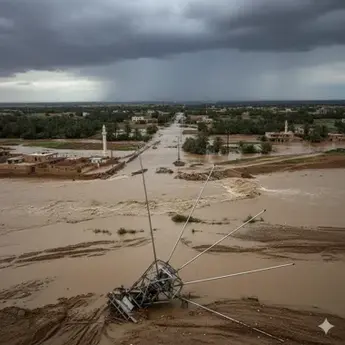
According to the ministry, China experienced 36 regional heavy rainfall events this year, with longer and more intense rainy seasons particularly in the north. The heavy summer rains and subsequent flooding forced tens of thousands of people to evacuate, submerged major roads, and revealed the limitations of aging flood-control systems.
In August alone, natural disasters caused losses of around $2.7 billion, affecting over 7.1 million people across 24 provinces. More than 3,700 homes were destroyed, and over 80,000 people — mostly in northern China, including the capital Beijing — were evacuated.
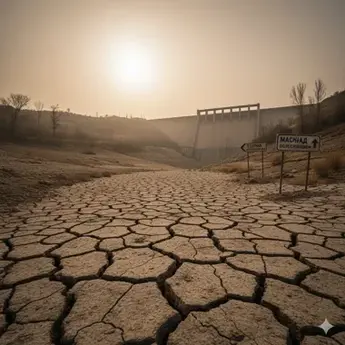
Agriculture was among the hardest-hit sectors, with more than 530,000 hectares of farmland damaged or destroyed, severely impacting rural communities. Farmers in provinces such as Anhui, Henan, and Hebei suffered heavy losses due to the combination of floods and droughts occurring within the same growing season.
The Ministry of Transport reported that typhoons and storms caused serious damage to infrastructure, estimated at around $2.2 billion across 23 provinces, disrupting roads, bridges, and key transport networks.
Meteorological experts warned that climate change is increasing the frequency and intensity of extreme weather events. The 2025 disaster season saw more concentrated rainfall and faster-forming floods compared with previous years. Authorities have called for accelerating the development of flood-control systems, expanding urban drainage capacity, and improving early warning mechanisms in vulnerable areas. The government is also working on its “sponge cities” initiative — urban areas designed to absorb rainwater — although implementation remains in its early stages.
The growing economic losses are adding pressure to public finances, as many local governments struggle with high debt levels that limit their ability to fund emergency responses and long-term recovery. Analysts warned that disaster losses could rise further in the final quarter of the year if extreme weather persists.
July recorded the highest average temperature in China since 1961, while the hot and dry weather in August affected autumn grain crops in provinces such as Hubei and Jiangxi. The number of typhoons forming and making landfall also exceeded previous forecasts, causing major impacts in Guangdong Province, where more than 3 million people were affected.