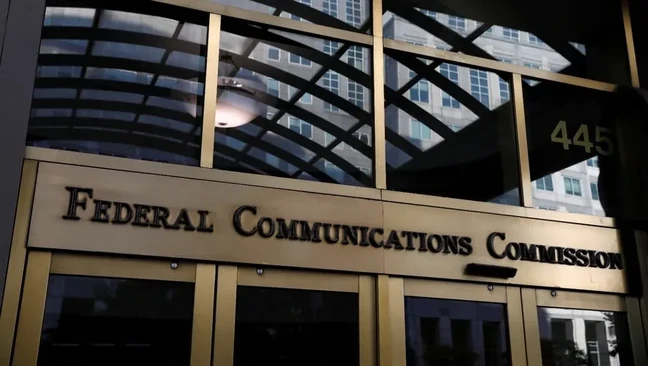
In a fresh escalation of the ongoing tech rivalry between Washington and Beijing, the U.S. Federal Communications Commission (FCC) has announced stricter measures targeting Chinese technology companies, citing national security risks linked to their telecommunications equipment.
The Federal Communications Commission (FCC) voted unanimously on Tuesday to ban the authorization of devices containing components from Chinese firms listed on its “Covered List,” while also granting itself the authority to revoke existing licenses under specific conditions. The move aims to reduce U.S. dependence on Chinese-made technology deemed potentially harmful to national security.
FCC Commissioner Brendan Carr warned that “these security loopholes represent opportunities that criminals or foreign adversaries could exploit to compromise our networks,” adding that “America’s foreign adversaries are constantly seeking ways to take advantage of any weakness in our systems.”
Companies previously placed on the FCC’s Covered List include Huawei, ZTE, China Mobile, and China Telecom—firms that have faced multiple U.S. restrictions over the past few years.
Carr also revealed that major U.S. online retail platforms have already removed millions of listings for restricted Chinese electronic products as part of a broad enforcement campaign led by the agency.
The new restrictions affect unlicensed devices such as home security cameras and smartwatches made by companies including Huawei, Hangzhou Hikvision, ZTE, and Dahua.
However, Hikvision has opposed the expanded restrictions, arguing that the FCC is “overstepping its authority” and that the decision “is not based on any product-specific evidence.” The company warned that the measure would cause unnecessary harm to small businesses and communities in the U.S. that rely on already-approved and compliant security systems.
Earlier this month, the FCC issued a National Security Notice reminding U.S. companies of prohibited devices, including video surveillance equipment. On October 15, the commission also announced plans to revoke the operating license of Hong Kong-based telecom provider HKT, a subsidiary of PCCW, citing similar national security concerns.