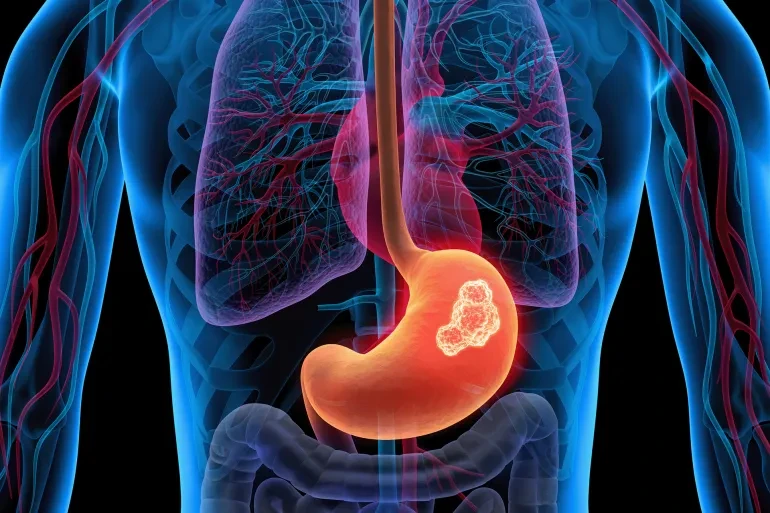
After years of concern and debate, a large population-based study published in the British Medical Journal (BMJ) offers reassuring findings, showing that long-term use of acid-suppressing drugs for heartburn and gastroesophageal reflux disease does not increase the risk of stomach cancer when key methodological factors are carefully controlled.
Proton pump inhibitors (PPIs), among the most commonly prescribed medications for treating acid reflux and heartburn, have long been suspected of increasing the risk of stomach cancer. However, the new study—based on national health data from five Northern European countries—found no statistically significant association between long-term PPI use and gastric adenocarcinoma.
Conducted as part of the NordGETS research project, the study analyzed high-quality national medical registries from Denmark, Finland, Iceland, Norway, and Sweden, covering the period from 1994 to 2020. It included 17,232 patients diagnosed with stomach cancer and 172,297 cancer-free individuals randomly selected from the general population and matched by age, sex, calendar year, and country.
Researchers focused on long-term PPI use lasting more than one year, excluding the year immediately preceding cancer diagnosis to avoid bias related to treating early, undiagnosed symptoms of the disease. A parallel analysis was also conducted among users of histamine-2 receptor antagonists—medications prescribed for similar conditions—to test the specificity of the findings.
The results showed that 10.2% of stomach cancer patients had used PPIs long term, compared with 9.5% of individuals in the control group. After adjusting for multiple confounding factors—including Helicobacter pylori infection, peptic ulcer disease, smoking, alcohol consumption, obesity, type 2 diabetes, and the use of other medications—no significant association was found between long-term PPI use and stomach cancer risk.
No similar association was observed among users of histamine-2 receptor antagonists, further strengthening the reliability of the findings.
Why One Type of Stomach Cancer Was Excluded
The researchers excluded cancers of the gastric cardia to avoid confounding with gastroesophageal reflux disease, the primary indication for prescribing PPIs. Moreover, the proposed biological mechanisms linking PPIs to cancer do not apply to this cancer subtype.
The study also identified several reasons why earlier research may have reported false-positive associations, including:
-
Counting medication use shortly before cancer diagnosis
-
Including short-term drug use
-
Failing to distinguish between different types of stomach cancer
-
Inadequate adjustment for H. pylori infection
What Do the Findings Mean for Patients?
These results provide important reassurance for millions of patients who rely on long-term PPI therapy when there is a clear medical indication. The study suggests that prolonged use does not appear to increase the risk of stomach cancer when evaluated using robust, well-controlled methods.
Nevertheless, the researchers stress the importance of appropriate prescribing and regular medical follow-up, as long-term PPI use may be associated with other potential side effects unrelated to cancer.
The study concludes that proton pump inhibitors are not linked to an increased risk of stomach cancer when used long term under proper medical supervision, while emphasizing the need for periodic reassessment of their continued necessity—especially in individuals with other known risk factors such as smoking, H. pylori infection, poor diet, or a family history of gastric cancer.