

Pakistan expects coldest winter in decades after massive floods
A UN report warns that Pakistan could face one of its coldest winters in decades due to the La Niña climate pattern, which is …
Officials said that Indonesia’s nuclear agency is still working to determine the full extent of radioactive contamination linked to a scrap metal factory, after detecting high levels of radiation in ten sites within an industrial area near the capital, Jakarta.
Authorities discovered radioactive contamination in the sprawling Sicanade Industrial Zone, where high concentrations of cesium-137 (Cs-137) were found. Cs-137 is a man-made radioactive isotope used in medical and measuring devices, and it is also a byproduct of nuclear fission in reactors and nuclear weapons tests—technologies Indonesia does not possess.
According to the Minister of Environment, radiation levels in some locations reached about 1,000 microsieverts per hour (equivalent to one millisievert), a high figure compared to the natural exposure range of 2–3 millisieverts per year. Annual exposure exceeding 100 millisieverts is known to significantly increase the risk of cancer, while cumulative exposure of one sievert could lead to a fatal cancer case in about 5% of those exposed.
Authorities reported that at least nine people have received treatment after being exposed to radiation in the industrial zone, though the duration and intensity of their exposure remain unclear. Initial investigations suggest that a metal factory within the area may be the source of the contamination.
The Indonesian government launched a broader investigation after the U.S. Food and Drug Administration (FDA) discovered in August that a shipment of shrimp exported from Indonesia to the United States was contaminated with cesium-137. The shrimp had been processed in the same industrial area.
The FDA stated that the cesium-137 level in the shipment reached around 86 becquerels per kilogram—below the intervention threshold—but still barred it from entering the U.S. market. The agency also issued a warning against consuming or selling shrimp from the company, noting that avoiding such products helps reduce low-level radiation exposure that may cause health effects with prolonged contact.
Although the industrial zone remains operational, it is under close supervision by Indonesian authorities, who are taking steps to remove the contamination gradually.
A similar incident occurred in January 2020, when Indonesia’s nuclear agency discovered cesium-137 contamination near a residential area in South Tangerang City.
A UN report warns that Pakistan could face one of its coldest winters in decades due to the La Niña climate pattern, which is …
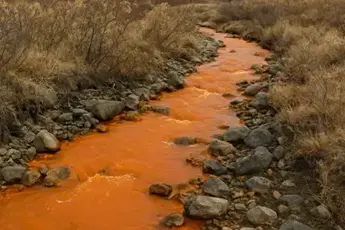
In Alaska’s Brooks Range, once-clear rivers are turning a rusty orange as melting permafrost releases toxic minerals, threatening fish, wildlife, and fragile Arctic ecosystems.
Heavy rainstorms hit New York City on Thursday, killing two people and causing severe flooding that disrupted flights, submerged streets, and halted parts of …
Iran is facing intense flooding in several western regions after months of severe drought that has pushed the country into its worst water crisis …
A new report by the International Institute for Environment and Development warns of a sharp global rise in extreme heat days, with major capitals …
China criticized the EU for “double standards” after EU officials called its new climate targets insufficient. Beijing pledged to cut emissions by up to …