U.S. President Donald Trump received Saudi Crown Prince Mohammed bin Salman at the White House in Washington on Tuesday, marking the crown prince’s first visit since 2018. The two held a meeting in the Oval Office, followed by an official lunch, and are scheduled to attend a dinner later in the evening.
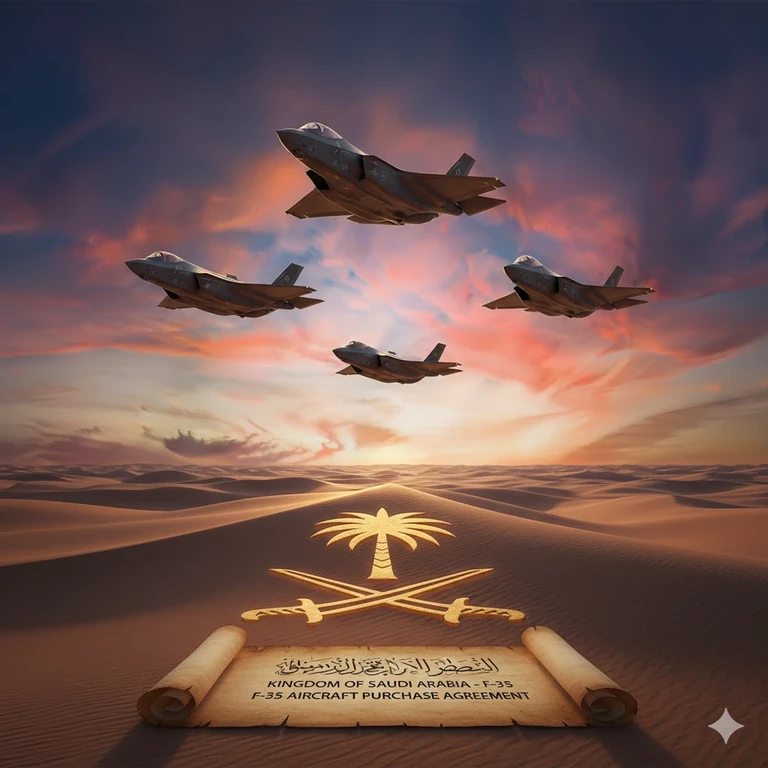
After the meeting, Trump said the talks were successful, describing the crown prince as “a close friend who is highly respected in the White House.” He highlighted the $600 billion in Saudi investments in the United States and expressed hope that the figure would reach one trillion dollars. Trump also spoke about major investments during his term, a new defense agreement with Saudi Arabia, and the possibility of a civilian nuclear deal, confirming that Washington will sell F-35 fighter jets to the kingdom.
For his part, Crown Prince Mohammed bin Salman announced that Saudi Arabia will increase its investments in the United States to around one trillion dollars, stressing the kingdom’s belief in a shared future with Washington and its need to strengthen its capabilities in artificial intelligence and semiconductors. He also expressed Saudi Arabia’s desire to join the Abraham Accords, on the condition that the path toward a two-state solution is clearly defined.
During the visit, the two sides are expected to sign military and economic agreements, including defense deals, civilian nuclear cooperation, and multi-billion-dollar investments in U.S. artificial-intelligence infrastructure. The visit is also likely to advance a deal for the sale of 48 F-35 jets to Saudi Arabia—a significant shift in U.S. policy.
Meanwhile, Israel has voiced concern over the sale of these advanced jets to Riyadh, fearing it could weaken its qualitative military edge in the region. Yedioth Ahronoth revealed an Israeli Air Force document warning that giving Saudi Arabia fifth-generation stealth aircraft may undermine Israel’s operational advantages.
Additionally, the crown prince seeks security guarantees, advanced AI technology, and progress on a civilian nuclear program. Analysts say Trump aims to deepen U.S.-Saudi ties to keep Riyadh from drifting toward China, while also pushing for Saudi Arabia’s accession to the Abraham Accords.
Experts believe that even if immediate progress on normalization is not achieved, this is unlikely to hinder a new U.S.-Saudi security agreement, given Trump’s interest in expanding investment and strengthening defense cooperation.