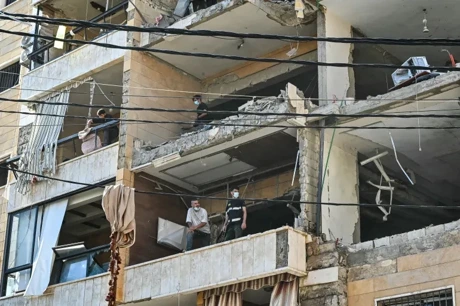
The Thai armed forces announced on Monday that they had carried out a series of airstrikes along their disputed border with Cambodia. This latest military escalation comes after both countries exchanged accusations of violating the ceasefire agreement that had been brokered earlier by U.S. President Donald Trump.
The roots of the crisis go back to the tensions that erupted between the two sides in recent months. In July, the border dispute escalated into armed clashes that developed into a short but intense five-day war. That round of violence ended after the intervention of U.S. President Donald Trump and Malaysian Prime Minister Anwar Ibrahim, who managed to mediate a ceasefire agreement signed in Kuala Lumpur in October. The agreement included expanded terms meant to stabilize the truce and prevent renewed confrontations.
According to an official statement issued by the Thai army, the latest clashes — which erupted in two areas in northeastern Ubon Ratchathani Province — resulted in the death of at least one Thai soldier and the injury of four others. Bangkok confirmed that its forces were targeted by direct fire from Cambodian troops, prompting the Thai military to respond by deploying warplanes to strike Cambodian military positions at several points along the border.
For its part, Cambodia’s Ministry of Defense released a statement accusing Thailand of launching surprise attacks early this morning on two of its military sites, following what it described as “provocative actions” over the past few days. The statement added that Cambodian forces refrained from responding to avoid widening the conflict.
It is worth noting that the dispute between the two countries is not new. In July, the shared border witnessed deadly clashes that claimed the lives of at least 48 people on both sides and forced nearly 300,000 civilians to flee the surrounding areas. Tensions reignited again last month after a landmine explosion injured a Thai soldier, leading Bangkok to announce the suspension of its commitment to the ceasefire agreement.
Thailand and Cambodia have long contested ownership of several strategic sites along their 817-kilometer shared border, which was originally demarcated in 1907 by the French colonial administration that governed Cambodia at the time. As successive governments rose to power and nationalist sentiment strengthened in both countries, these areas remained points of political and military friction, raising international concerns that the current escalation could spark a wider conflict threatening the stability of the entire region.