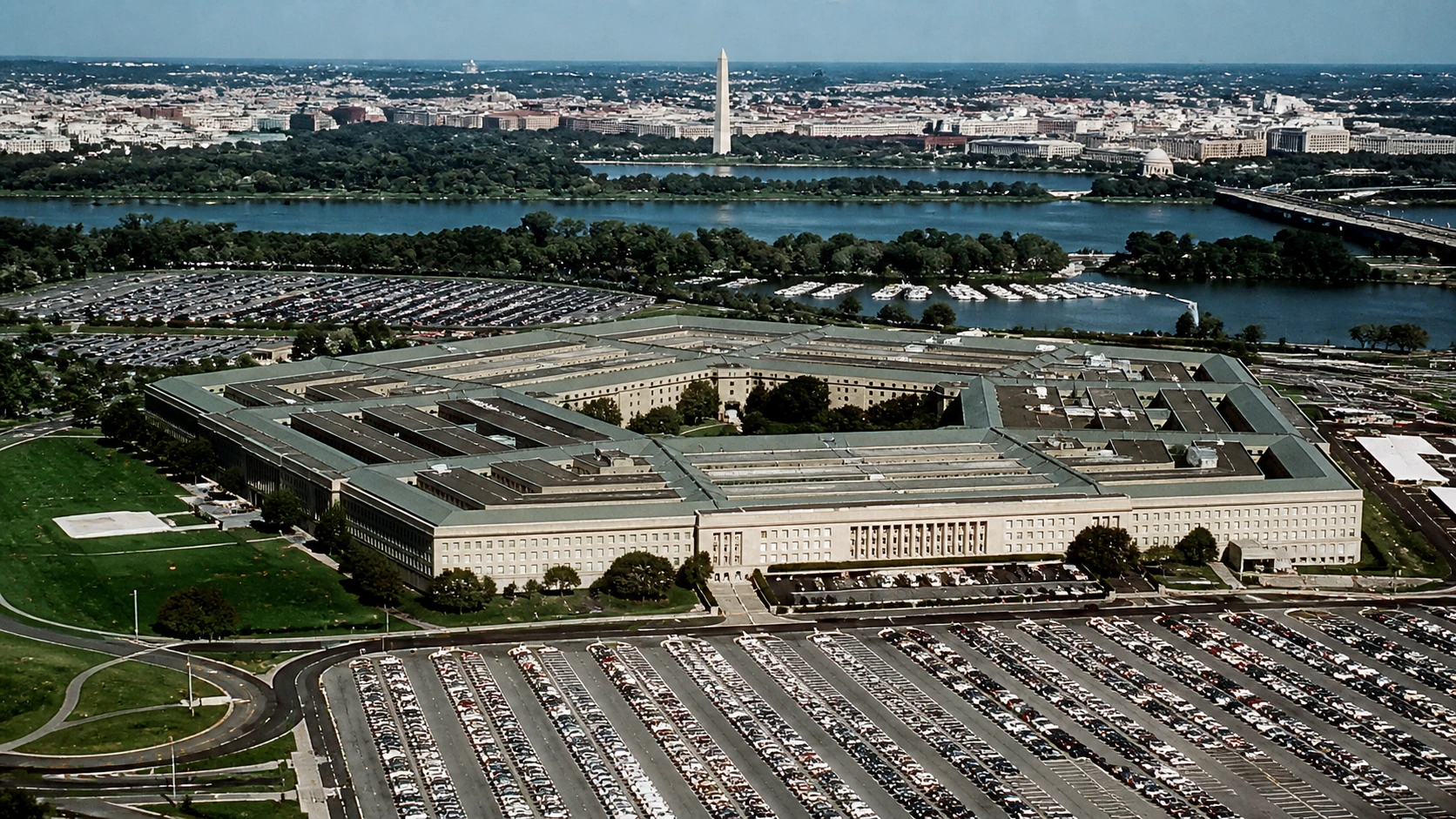
The U.S. Department of War has confirmed new agreements with seven major AI companies to bring advanced artificial intelligence tools into military operations. These companies include SpaceX, OpenAI, Google, Nvidia, Reflection, Microsoft, and Amazon Web Services. Their AI systems will be used across classified Pentagon networks for what officials describe as “lawful operational use.”
The goal is to transform the U.S. military into what it calls an “AI-first fighting force,” improving decision-making speed and gaining an advantage across different areas of warfare. For now, these AI tools are mainly focused on analyzing data and helping personnel process complex situations more efficiently, rather than making direct decisions.
Access to these tools is provided through GenAi.mil, the Pentagon’s official AI platform. According to the Department, more than 1.3 million personnel have already used the system, generating tens of millions of prompts and deploying hundreds of thousands of AI agents in just five months. Tasks that once took months can now be completed in days.
However, the growing role of AI in military operations has raised serious concerns. Some companies, like Anthropic, have refused to weaken safety restrictions on their models, warning that doing so could lead to misuse such as mass surveillance or autonomous weapons. This refusal reportedly led to the company being excluded from federal partnerships.
There are also broader concerns about how reliable AI is in high-stakes scenarios. In one experiment, advanced AI models were placed in simulated war situations, and most outcomes escalated into nuclear conflict. While these tools are currently limited to support roles with humans still in control, they highlight the risks of relying too heavily on machine-generated insights.
Another issue is “automation bias,” where humans may trust AI recommendations too much, even when conflicting information exists. Since AI systems process vast amounts of data quickly, their suggestions can seem more convincing—even if the underlying data is flawed or incomplete.
Meanwhile, other countries are also advancing AI in military use. China has demonstrated large drone swarms controlled by a single operator, along with ground-based robotic units designed for combat scenarios. As AI becomes more integrated into defense systems worldwide, the challenge will be ensuring that human oversight remains in place and that safeguards are not ignored.