
Russia announces downing hundreds of Ukrainian drones
The Russian Ministry of Defense announced that its air defenses intercepted and destroyed 251 Ukrainian drones overnight — one of the largest such attacks …
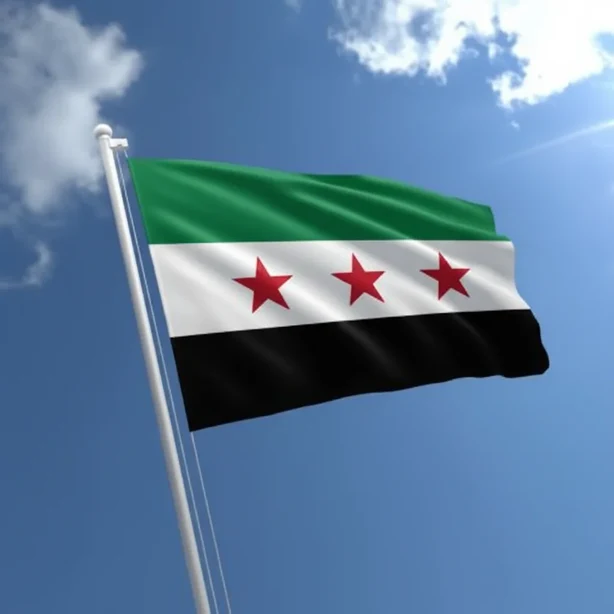
Damascus – Under the vaulted halls of the National Library in Damascus, an extraordinary day unfolded in the memory of Syrians, as the building’s halls filled from early morning with the voices and movement of voters navigating between registration tables and ballot boxes — in an atmosphere marked by both caution and hope.
The scene reflected Syrians’ return to open political participation after many years of silence, during the first parliamentary elections held since the fall of Bashar al-Assad’s regime in December of last year.
Inside, election officials were busy organizing queues and checking voter lists, while local observers and foreign diplomats moved between the halls to monitor the voting process. Outside, cameras gathered to capture a moment described as a turning point in the country’s history after more than a decade of conflict and division.
The Supreme Election Committee confirmed that counting and sorting began immediately after the polls closed in several provinces, noting that the process took place “in a calm and organized atmosphere,” with high voter turnout reported in some major cities.
Alongside the electoral activity, a variety of political programs were presented, focusing on judicial and educational reform, encouraging investment, rebuilding state institutions, and combating corruption.
Candidate Abdullah Taqi al-Din said the next parliament must be “a truly reformist body,” emphasizing that reforming the judiciary and education systems is the only path to national revival.
Candidate Mohammad Saadi Sukkarieh stressed that the new parliament should enact laws addressing security and economic challenges and restoring confidence in the investment sector, asserting that “legal stability is the foundation of sustainable development.”
Bayan al-Mahayni called for a parliament close to the people and attentive to their daily issues, prioritizing education and public services. Meanwhile, Rahaf al-Homsi emphasized that justice and the rights of detainees and the disappeared should top the council’s agenda, “for there can be no revival without fairness.”
Moatasem Arar added that the coming parliament must review outdated laws and abolish provisions that contradict the principles of justice and citizenship, paving the way for a new constitution that restores trust between the state and society.
These elections are being held under a mixed system: 140 of the 210 seats are filled through indirect voting by about 6,000 electors representing different provinces and sectors, while the remaining third are appointed by presidential decree issued by President Ahmad al-Shar’a.
As the final results are awaited, Syrians are watching with anticipation and hope that these elections will mark the beginning of a new political phase — one that ends years of division and reinforces the principles of participation and accountability in state institutions.
Despite ongoing debate over the voting mechanism and the limited participation, what took place in Damascus seemed to symbolize the return of politics to public life — in a nation exhausted by war, yet still striving to rise again through words and ballots, not weapons.
The Russian Ministry of Defense announced that its air defenses intercepted and destroyed 251 Ukrainian drones overnight — one of the largest such attacks …
Qatar will build an Air Force facility at Mountain Home Base in Idaho to train F-15 pilots alongside U.S. troops, marking a new step …
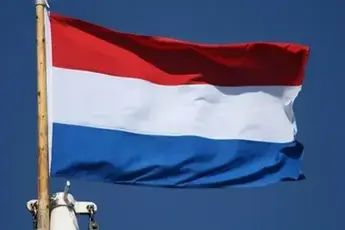
The Netherlands is close to finalizing an agreement with Uganda to establish a deportation center for rejected asylum seekers. The plan, which has drawn …
In a New York Times article, Eric Rosenbach and Chris Li warn that U.S.–China tensions have reached a dangerous level, raising the risk of …
The American political scene was shaken by the shocking death of Kirk, one of the most prominent rising figures in the conservative right, during …
France has witnessed its largest protests since 2023, as hundreds of thousands took to the streets against the government’s 2026 budget plan. Driven by …