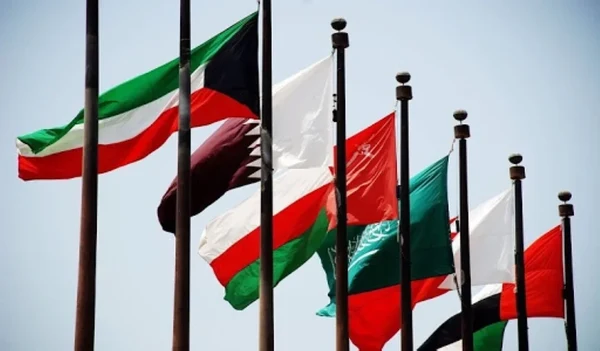
The Joint Defense Council of the Gulf Cooperation Council (GCC) held an extraordinary meeting today, Thursday, in the Qatari capital, Doha, to discuss the repercussions of the recent Israeli attack on the State of Qatar. In a strongly worded statement, the council condemned the serious military aggression, affirming that it represents a direct threat not only to Qatar but to all GCC states, as their security and defense are considered an indivisible whole.
In his opening remarks, GCC Secretary-General Jasem Mohamed Al-Budaiwi stressed that any attack on Qatar is an attack on all member states, noting that the current stage requires strengthening joint action and enhancing collective defense capabilities to confront the escalating challenges in the region. He explained that the council adopted several practical measures, foremost among them enhancing intelligence sharing through the Unified Military Command and expediting the work of the joint task force on the early-warning system against ballistic missiles.
For his part, Qatari Deputy Prime Minister and Minister of State for Defense Affairs, Sheikh Saud bin Abdulrahman Al Thani, emphasized that the GCC countries form a single entity that cannot be divided, and that any assault on one member state constitutes an assault on the entire council. He added that this stance reflects the firm solidarity of the Gulf states in facing regional and international threats, pointing out that the meeting comes at a critical time that requires the highest levels of coordination and integration.
Meanwhile, Qatar’s Chief of Staff, Lieutenant General Jasem bin Mohamed Al-Mannai, chaired the emergency session of the GCC Supreme Military Committee of Chiefs of Staff, during which participants discussed a number of security issues, most notably the consequences of the Israeli attack, in addition to regional and international challenges facing the area. In its concluding statement, the committee reaffirmed its full support for Qatar in any measures it might take to safeguard its sovereignty and security.
It is noteworthy that this meeting followed the extraordinary Arab-Islamic summit held in Doha after the Israeli assault on Qatar, which took place during a meeting of several Hamas leaders as they discussed a new U.S. proposal for a ceasefire in the Gaza Strip. The attack was widely seen as a dangerous attempt to destabilize not only Qatar but the region as a whole, prompting urgent moves at both the Gulf and Arab levels to unify positions and defend collective security.