

OpenAI buys cloud services from Amazon for $38 billion
OpenAI has struck a seven-year, $38 billion partnership with Amazon Web Services (AWS) to expand its cloud infrastructure and accelerate the development of human-level …

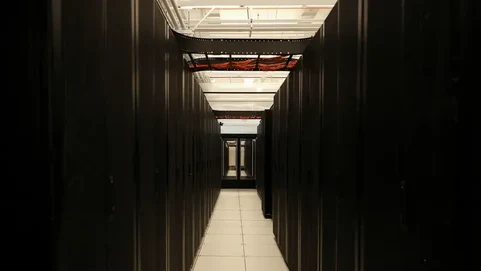
In a heated global race led by U.S. tech giants, hundreds of billions are being poured into massive data centers powering the AI revolution. Record-breaking spending that sparks both admiration and concern—could it all end in another economic bubble?
Between 2022 and 2024, these tech giants already spent nearly $477 billion on data centers, and projections show this figure soaring to $1.15 trillion by 2027. Globally, data center investments are expected to hit $2.9 trillion by 2028, divided as follows:
$1.6 trillion on chips and servers.
$1.3 trillion on infrastructure, including real estate, energy, and construction.
While these investments could add up to 0.4% to U.S. GDP growth during 2025 and 2026, analysts warn of risks due to their heavy concentration in limited regions such as Northern Virginia—raising concerns about economic imbalance.
Some experts even compare today’s rush to the telecom bubble of the 1990s, when capital flooded into building networks that later collapsed.
The big question remains: What happens when global demand for data slows down?
Tech giants may struggle to justify their massive spending.
Other sectors could be starved of investment.
Related industries such as energy and real estate may suffer setbacks.
A boom that could reshape the global economy—or a bubble waiting to burst.
OpenAI has struck a seven-year, $38 billion partnership with Amazon Web Services (AWS) to expand its cloud infrastructure and accelerate the development of human-level …

Bitcoin has dropped below $96,000 for the first time in over six months, signaling renewed pressure on the cryptocurrency market as investors react to …
Gold prices hit a two-week high while oil climbed, fueled by optimism that the U.S. government shutdown may soon end. The dollar remained stable …
Russia has taken a major step toward deepening its financial ties with China by issuing its first-ever government bonds denominated in the Chinese yuan. …
While the United States recorded faster-than-expected growth in the third quarter, the looming shadows of government shutdowns and trade tariffs threaten the sustainability of …
"Despite a trillion-dollar trade surplus, China's economic momentum faded in November. With retail growth hitting a three-year low and the property sector contracting further, …