Recent economic data, reported by The Wall Street Journal, reveals deepening signs of a slowdown in the Chinese economy during November. The gap between strong exports and weak domestic demand has widened, placing increasing pressure on Beijing to rebalance the world's second-largest economy.
"Gloomy" Indicators and Internal Contraction
Official figures showed a broad decline in key domestic growth drivers:
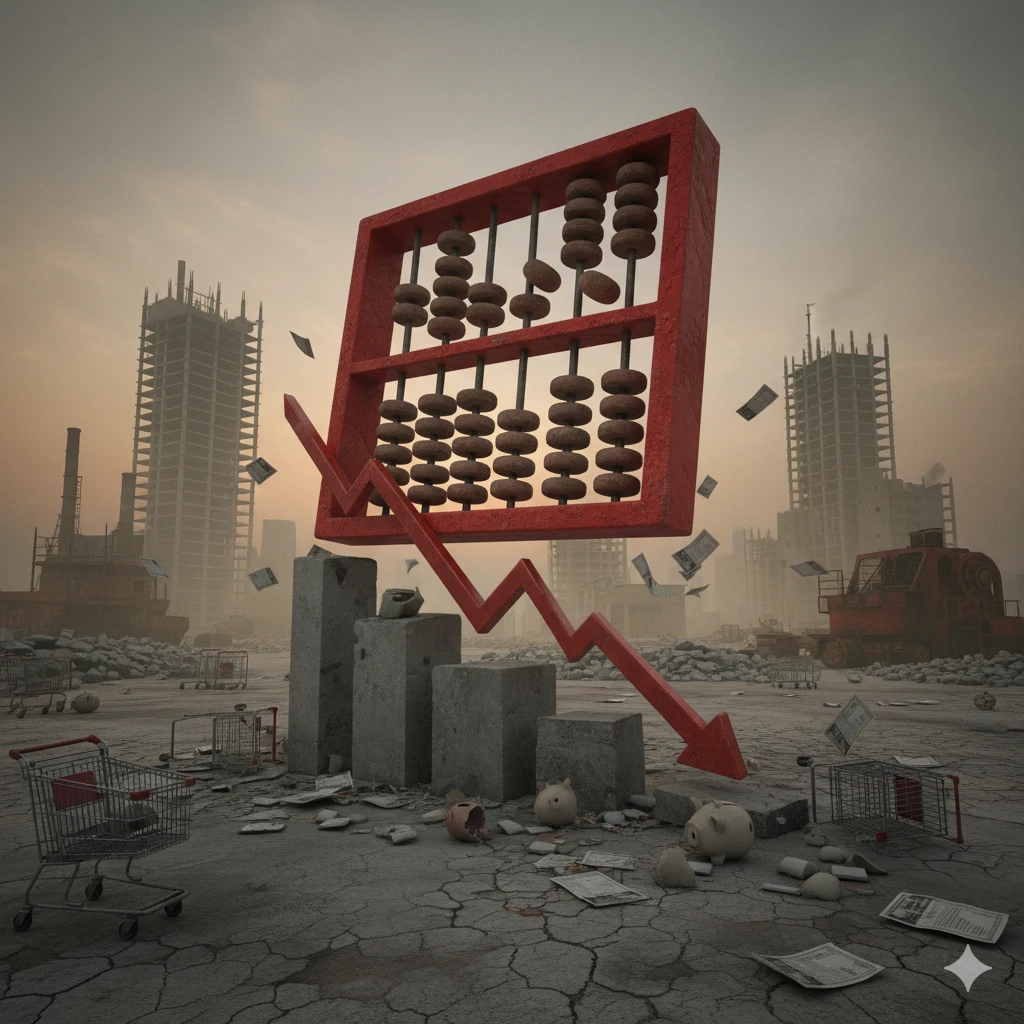
The Real Estate Bleeding Continues
The property crisis continues to be the heaviest burden on the economy, with indicators maintaining a steep decline:
The Growth Paradox: Record Exports vs. Internal Deficit
Despite China achieving a record trade surplus ($1 trillion in the first 11 months), this over-reliance on exports masks fundamental imbalances. Producer prices have remained in negative territory for over three years, indicating persistent deflationary pressures that limit the economy's ability to generate balanced growth.
In this context, the IMF Managing Director warned that "China is too big to rely on exports alone," noting that this approach could exacerbate global trade tensions.
Government Promises vs. Strategic Reality
While Chinese leaders have pledged to prioritize supporting domestic demand and raising household incomes in 2026—along with plans to convert existing real estate inventory into affordable housing—long-term strategic directions suggest a different path. The upcoming Five-Year Plan continues to place advanced technology, high-end manufacturing, and industrial self-reliance at the top of the agenda through the end of the decade. This raises questions about the commitment to a rapid shift toward a consumption-led economy.
Alternative Version (Brief Points Style):
China in November: Exports Lead Amidst Internal Stagnation
Analysis by The Wall Street Journal highlights a sharp divergence in China's economic performance in November. Domestic drivers (consumption and investment) faced increasing pressure, while exports remained the sole lifeline.
Key Signs of Slowdown:
-
Property Crisis: Real estate investment dropped by nearly 16%, alongside falling home prices in 70 cities, confirming the crisis persists.
-
Consumer Reluctance: Retail sales growth hit its lowest point since 2022 (1.3%), indicating that previous government support programs failed to sustain demand
-
Investment: Deepening contraction in fixed assets reflects caution among companies and investors.
The Strategic Dilemma:
Despite Beijing's pledges to support household income and boost local consumption in 2026, actual policies and Five-Year Plans continue to bet on "advanced manufacturing" and "technology" as engines of growth. This contradicts IMF warnings regarding the need to reduce reliance on exports to avoid global trade conflicts.