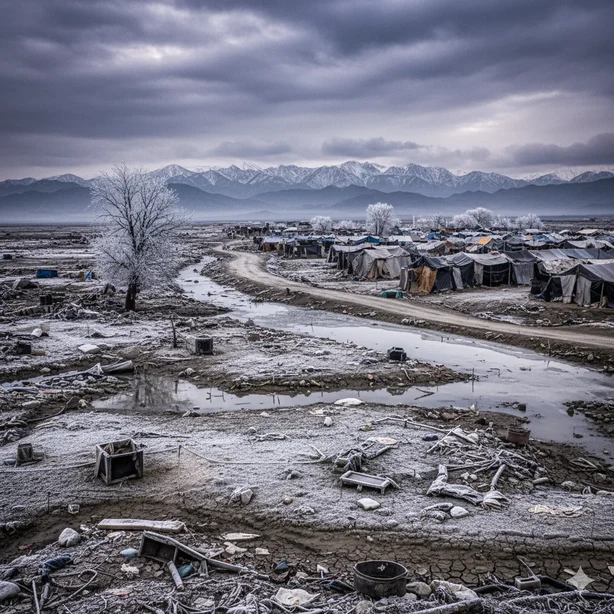
A report by the United Nations Office for the Coordination of Humanitarian Affairs (OCHA) warned that Pakistan may experience one of its coldest winters in decades, as the La Niña climate pattern is expected to cause unusually low temperatures across the country.
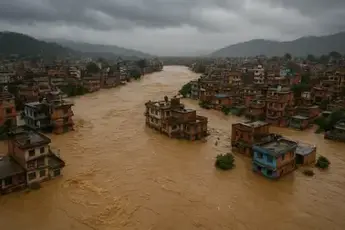
According to the report, prepared by OCHA’s Inter-Sector Coordination Group, this drop in temperature will worsen the hardships of families already affected by the devastating monsoon floods, particularly in Khyber Pakhtunkhwa and Gilgit-Baltistan in northern Pakistan.
The La Niña phenomenon occurs when sea surface temperatures in the Pacific Ocean fall below average, leading to global climatic shifts that cause extreme temperature fluctuations and abnormal rainfall patterns.
As winter approaches, the report warns that the combined effects of La Niña and ongoing floods pose threats not only from the cold but also to food security, public health, and economic recovery, especially in the country’s vulnerable northern and mountainous regions.
The report predicts that northern areas—including Khyber Pakhtunkhwa, northern Punjab, Pakistan-administered Kashmir, and Gilgit-Baltistan—will see below-average rainfall, while southern regions such as Sindh, Balochistan, and southern Punjab will experience near-normal rainfall. It adds that slightly negative phases of both the El Niño–Southern Oscillation and the Indian Ocean Dipole will also influence these rainfall patterns.
The report warns of multiple consequences from this unusual combination of cold weather and post-flood conditions. Expected impacts include disruptions to autumn crop harvests due to scattered storms, a higher risk of dengue fever outbreaks from stagnant water, possible glacial lake outburst floods in high-altitude areas, reduced river flows affecting irrigation, increased smog and air pollution in plains, and negative effects on livestock health and fodder availability.
It also highlights the deteriorating post-flood situation, noting that the government and humanitarian partners have a limited response capacity.
According to a recent assessment by the Food and Agriculture Organization (FAO), floods submerged about 1.2 million hectares in Punjab—the country’s main food-producing region—causing severe damage to rice, cotton, and sugarcane fields.
The disaster coincided with the critical spring planting season, worsening food security and livelihoods and hampering recovery efforts. Additionally, stagnant floodwaters in some areas continue to pose major health risks, fostering waterborne diseases such as cholera, diarrhea, and typhoid, as well as vector-borne diseases like malaria and dengue fever, which thrive in such conditions.