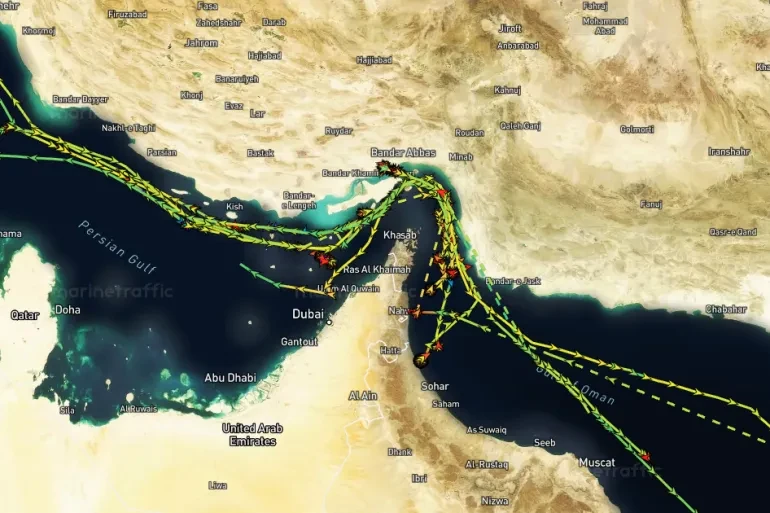
Oil prices surged again on Thursday as concerns over supply security in the Middle East resurfaced, after renewed tensions around the Strait of Hormuz and growing doubts over the durability of the truce between Washington and Tehran erased the wave of optimism that had briefly lifted markets.
Oil resumed its upward trajectory during Thursday trading, as investors remained uneasy about the future of the ceasefire between the United States and Iran, while fears mounted that energy supplies from the Middle East would not return quickly to normal levels.
Brent crude rose 3.67% to $98.23 per barrel, while U.S. West Texas Intermediate (WTI) crude gained 3.46% to $97.68 per barrel at the time of writing.
Markets had seen a sharp drop in crude prices during the previous session after investors bet that the truce would open the door to the resumption of shipping through the Strait of Hormuz, a vital artery for oil flows from major Gulf producers such as Saudi Arabia, Iraq, Kuwait, and Qatar. Roughly one-fifth of global oil supplies normally pass through the strategic waterway.
However, that relief proved short-lived as geopolitical risks quickly returned to the forefront, particularly with Israel’s continued attacks on Lebanon, casting further doubt on the prospects of stabilizing the ceasefire and turning it into a lasting agreement.
At the same time, market caution deepened after shipping companies said they still needed a clearer picture of the ceasefire arrangements before fully resuming transit through the Strait of Hormuz, amid reports of navigational measures and security warnings linked to the waterway.
Analysts believe the Strait of Hormuz remains far from returning to normal operations, given Iran’s continued influence over the passage, alongside logistical disruptions, rising insurance costs, and operational constraints. This means that any increase in energy flows over the coming days is likely to remain limited.
As markets watch closely to see whether the truce will hold or collapse under the pressure of regional escalation, oil remains hostage to geopolitical tensions, with prices highly sensitive to any development that could threaten one of the world’s most critical energy corridors.