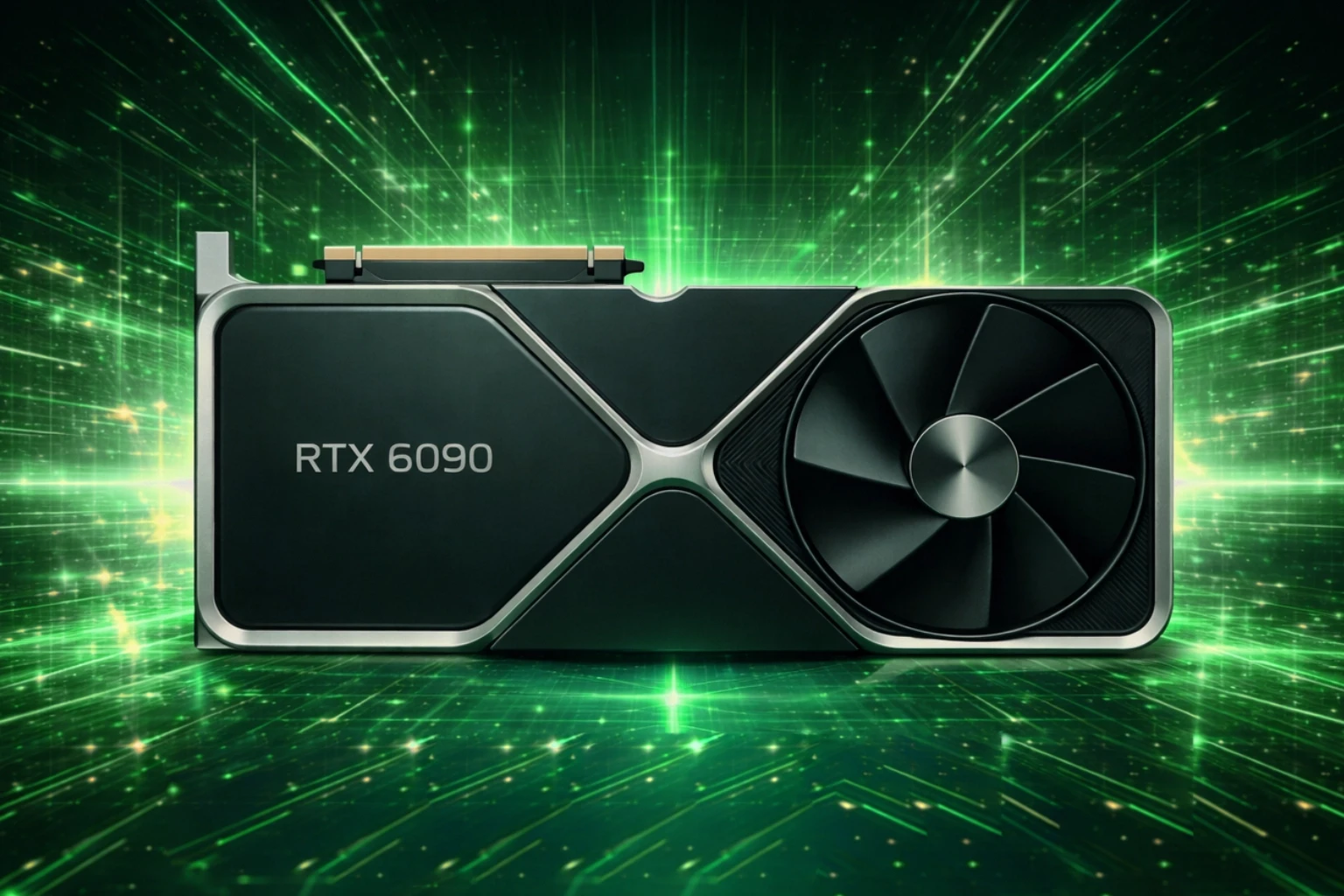
A new leak following Jensen Huang’s CES 2026 keynote suggests Nvidia’s next-generation RTX 60-series GPUs may use the company’s upcoming Rubin architecture, with a launch window in the second half of 2027.
Well-known leaker kopite7kimi claims the RTX 60 lineup will be based on “GR20x” dies derived from Rubin — an architecture originally designed for Nvidia’s future data-center products such as the Vera Rubin NVL72 AI supercomputer and the Rubin CPX accelerator card.
Until now, it was unclear what architecture Nvidia would use for its next gaming GPUs. If the rumor is accurate, Rubin will be adapted for consumer graphics rather than Nvidia developing a completely separate gaming architecture. Analysts previously found unused graphics-related hardware blocks inside Rubin CPX, hinting that Rubin may have been designed with gaming in mind.
Those specs suggest that a future RTX 6090 could see around a 30% performance gain from the GPU itself, even before factoring in clocks, node changes, or architectural refinements.
Vera Rubin NVL72 reportedly delivers up to 5× the AI performance of Blackwell while only increasing transistor density by 1.6×. While the 5× figure applies mainly to NVFP4 AI compute, stronger AI hardware would benefit future DLSS versions and Nvidia’s growing focus on neural rendering.
Nvidia is expected to use TSMC’s 3nm-class process for Rubin-based gaming GPUs, which would finally introduce a node shrink after the RTX 50 series remained on the same process as Ada Lovelace. That lack of a node upgrade is why RTX 50 GPUs showed minimal performance gains over RTX 40 in traditional rasterized games.
Huang reiterated at CES 2026 that the future of gaming graphics is shifting away from pure rasterization toward AI-driven rendering — further supporting the idea of bringing Rubin to gaming.
Meanwhile, reports suggest the RTX 50 Super refresh has been delayed or cancelled due to supply shortages, and Nvidia may even reintroduce older GPUs to manage the ongoing DRAM crunch.