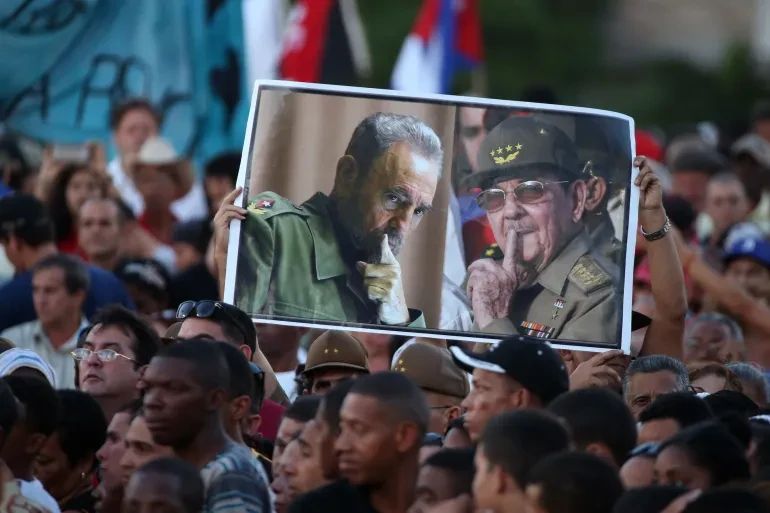
Caught between the hammer of unprecedented economic pressure and the anvil of a feared "chaotic explosion" just off the American coast, Cuba has returned to the forefront of Washington’s agenda. The Trump administration, having successfully choked off the communist island’s oil lifelines, now faces a historic dilemma: Should it push the regime toward a total collapse, or allow it to breathe through a "needle's eye" to prevent a catastrophic mass migration crisis?
Economic Strangulation with "Cautious Gloves"
Cuba is currently experiencing its worst energy crisis in modern history as Washington tightens its grip on Venezuelan oil supplies. Despite this escalation, the Trump administration is adopting a "tightrope walking" strategy, summarized by two key pillars:
-
Avoiding a Power Vacuum: Secretary of State Marco Rubio has signaled that while change is necessary, it does not have to happen "overnight," fearing the island could turn into an arena of unchecked violence.
-
The Oil Weapon: While Washington blocked supplies, it recently allowed companies to apply for licenses to resell Venezuelan oil to Cuba—a move analysts interpret as a "safety valve" to prevent a total systemic meltdown.
The Migration Nightmare and the Shadows of History
Washington is acutely aware that an "uncontrolled" collapse of the Havana regime would trigger a massive influx of migrants toward Florida’s shores. This scenario is feared by American policymakers almost as much as the communist regime itself. Furthermore, the historical memory of the Castro regime surviving grueling past crises makes betting on a "swift fall" a high-stakes gamble with uncertain outcomes.
The Paths Remaining for Havana
According to the New York Times report, Cuba stands at a historic crossroads with only two real options:
-
Bowing to the Storm: Offering painful concessions regarding economic freedoms in exchange for lifting the blockade.
-
Zero-Sum Confrontation: Continuing the policy of isolation and risking a total collapse under the weight of fuel shortages and international seclusion.
The Bottom Line: This is a complex game of political chess; while Washington’s "hawks" call for liberation, the fingers of diplomacy remain on the emergency brakes, fearing the repercussions of chaos on American soil.