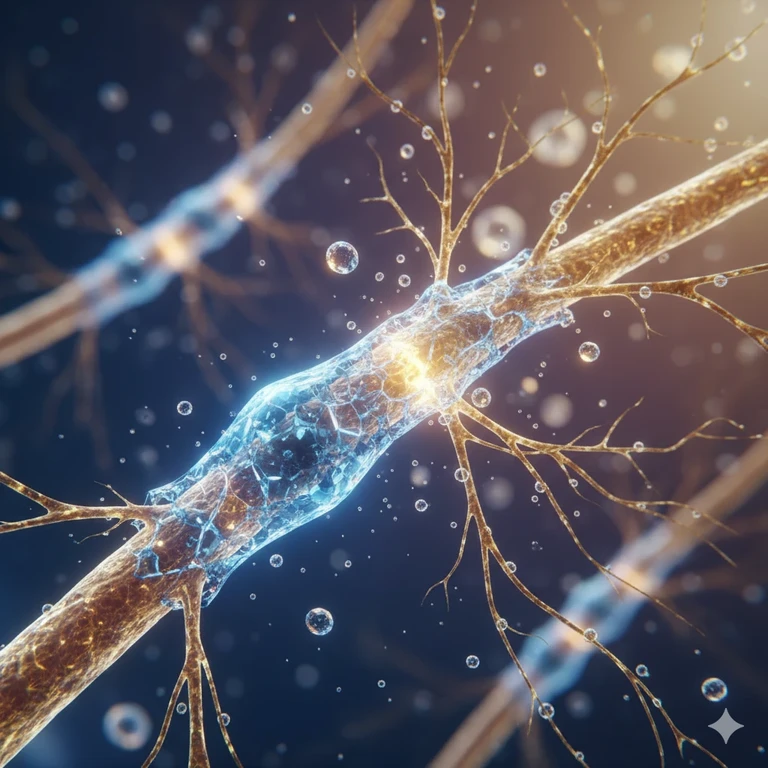
A team of scientists has made a significant medical breakthrough that could offer new hope to patients suffering from motor neuron disease (MND) — one of the most severe and devastating neurological disorders. Researchers have developed an experimental treatment called “M102”, which has shown promising results in protecting damaged nerve cells and significantly slowing the progression of the disease.
According to the British news agency PA Media, preclinical studies conducted on mice demonstrated that the new drug improved motor function and nerve performance, suggesting that it could have similar benefits when tested on humans. Scientists are now hoping to gain approval to move forward with clinical trials to test the drug on people with MND, a condition for which there is currently no effective cure.
Motor neuron disease is a degenerative neurological condition that causes the gradual breakdown of nerve cells responsible for transmitting signals from the brain and spinal cord to the muscles, leading to their progressive weakness and wasting. Over time, patients lose the ability to walk, speak, eat, and even breathe, and most die within two to five years of developing severe symptoms. It is estimated that around 5,000 people in the United Kingdom are currently living with the disease.
The new drug was developed through a collaboration between the Sheffield Institute for Translational Neuroscience in the U.K. and the U.S.-based biotechnology company Aclipse Therapeutics. M102 works by activating two protective systems inside nerve cells, known as NRF2 and HSF1, which help the body resist cellular stress, reduce inflammation, and eliminate damaged proteins that contribute to nerve degeneration.
Results published by the Sheffield Institute in a journal specializing in neurodegenerative research revealed that the drug significantly slowed disease progression in mice and helped preserve muscle function and strength for a longer period.
Professor Pamela Shaw, director of the Sheffield Institute and lead author of the study, stated:
“Motor neuron disease is one of the cruellest illnesses, robbing people of their movement and independence at an alarming rate.”
Shaw added that this discovery marks an important step toward finding an effective treatment, emphasizing that M102 brings “real hope” for slowing the disease’s progression and improving patients’ quality of life.
This scientific development represents a new ray of hope in the field of neurological research, opening the door to further studies aimed at creating innovative therapies that target the body’s natural protective mechanisms within nerve cells — rather than merely treating symptoms.