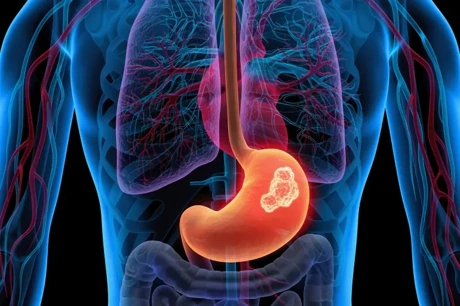
Smart fluorescent dye could help surgeons see cancer cells clearly and operate more safely
In a promising medical breakthrough, researchers have discovered a new method that could revolutionize pediatric cancer surgeries by helping doctors distinguish cancerous cells from healthy tissue in real time during operations.
A research team from Ann & Robert H. Lurie Children’s Hospital and Northwestern University’s Feinberg School of Medicine found that the Folate Receptor Beta (FR-β) is widely expressed across various solid tumors in children and adolescents, making it an ideal target for advanced imaging-guided surgery.
💡 Pafolacianine: The Dye That Changes Everything
The discovery centers on a fluorescent imaging agent called Pafolacianine, a next-generation dye that binds to folate receptors found on the surface of cancer cells.
When illuminated under special surgical lighting, the dye causes cancerous tissue to glow, allowing surgeons to clearly see and remove tumors while sparing surrounding healthy tissue.
Pafolacianine has already been approved by the U.S. Food and Drug Administration (FDA) for use in adult ovarian and lung cancer surgeries due to its remarkable ability to highlight tumors during operations.
🧫 Encouraging Results from a New Study
Published in the journal Oncotarget on October 16, the study analyzed tissue samples from 13 pediatric patients diagnosed with various cancers — including Wilms tumor, osteosarcoma, rhabdomyosarcoma, Ewing sarcoma, and neuroblastoma.
Results confirmed that the Folate Receptor Beta was present across a wide range of these tumors, highlighting its potential as a universal marker for pediatric oncology.
🔬 Toward Safer, More Precise Cancer Surgeries
Completely removing tumors in children is often challenging, especially when cancers spread or form tiny metastases that are difficult to detect.
With this new imaging approach, surgeons may soon be able to define tumor boundaries with exceptional accuracy, reducing the risk of leaving behind malignant cells and improving recovery outcomes.
This discovery paves the way for a new era of fluorescence-guided cancer surgery, where technology and medicine work hand in hand to bring new hope to young patients and their families worldwide.