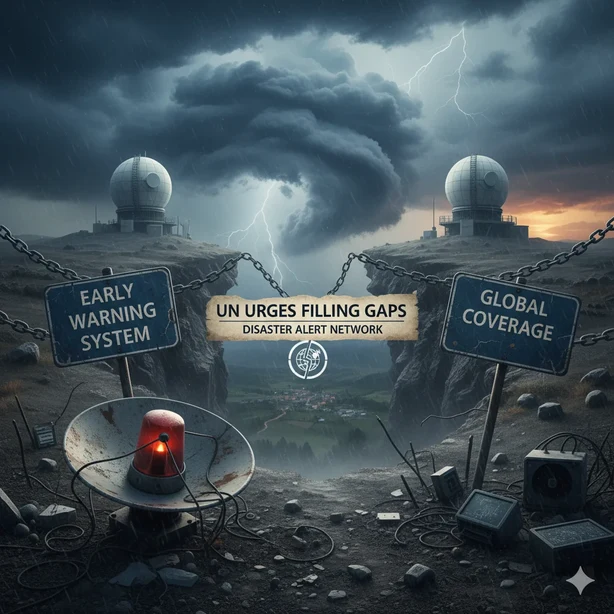
The World Meteorological Organization (WMO) has called for urgent action to close the gaps in the global disaster monitoring system designed to protect people from extreme weather events. The organization emphasized that early warning systems are especially vital in developing countries, which are more vulnerable to climate and water-related risks.
During a conference held in Geneva, the WMO revealed that weather-, climate-, and water-related disasters have caused over two million deaths in the past fifty years, with 90% of those fatalities occurring in developing nations. WMO Secretary-General Celeste Saulo stated that strengthening early warning systems is a top priority, stressing that “early warning means early action,” and that the goal is not only to alert the world but also to empower it to act effectively.
According to WMO data, only 55% of countries currently have adequate monitoring capabilities, representing a major gap in protecting populations from natural disasters. The organization noted that millions of people remain unprotected from dangerous weather events that increasingly damage economies and vital infrastructure.
Although the number of countries using early warning systems has doubled in the past three years to reach 119 nations, an assessment of 62 countries found that half possess only basic capacities, while 16% have below-basic capabilities.
Despite these challenges, the organization highlighted notable progress in Africa, particularly in Mozambique and Ethiopia, where more countries have launched official websites to issue unified alerts. However, the WMO reported that the death toll in countries with limited early warning systems is six times higher, and the number of people affected is four times greater than in nations with advanced systems.
At the conference, Elisabeth Baume-Schneider, Switzerland’s Interior Minister, stressed that no country or region is immune to the effects of climate change and extreme weather. She cited Switzerland’s experience in monitoring the mountain glacier Piz Glacier, which enabled scientists to predict its imminent collapse in May 2025, allowing authorities to evacuate the village of Blatten in time.
The minister added that melting permafrost will inevitably lead to more glacier collapses and rockfalls, making early warning systems ever more essential.
A previous United Nations report warned that actual losses from natural disasters could reach $2.3 trillion annually, ten times higher than earlier estimates, with widespread impacts on healthcare, housing, and education. The report also confirmed that financial losses from disasters have doubled over the past two decades.