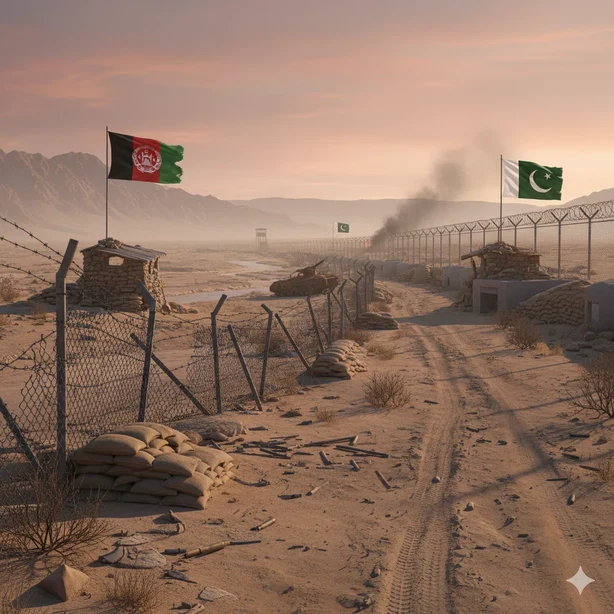
Between October 9 and 12, 2025, the border region between Afghanistan and Pakistan witnessed renewed armed clashes — the most intense since the Taliban took power in Kabul in 2021. Field reports indicated that Taliban forces, now acting as Afghanistan’s official army, launched attacks on Pakistani military positions along the roughly 2,600-kilometer frontier. In response, Pakistan carried out air and artillery strikes targeting areas inside Afghan territory, leading to the closure of key border crossings and the suspension of trade and civilian movement between the two countries.
Accounts of casualties varied widely. The Afghan Ministry of Defense claimed that a large number of Pakistani soldiers were killed, while Islamabad reported the deaths of dozens of Taliban fighters and allied forces, saying its response was extensive. International organizations and news agencies noted that these figures have not yet been independently verified and cautioned that statements from both sides may be exaggerated amid the accompanying media warfare. A partial ceasefire was reportedly reached between October 12 and 13.
Meanwhile, Pakistani government sources stated that the situation along the border remains tense despite the Afghan government’s announcement that it had halted its military operations. The sources added that Kabul had rejected an official request from Islamabad to send a Pakistani delegation to Afghanistan. Although the request was submitted through formal diplomatic channels, the Afghan Foreign Ministry declined to issue visas without providing an explanation.
In a related development, an explosion was heard in the Afghan capital, Kabul, last Thursday. Media reports suggested that a Pakistani airstrike targeted the Margha area in Paktia Province, south of Kabul and near the border. Afghan authorities later blamed Pakistan for the blasts, holding it responsible for the attack.
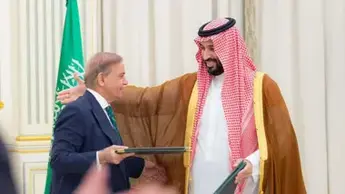
The Pakistani army announced that 23 of its soldiers were killed in the clashes with Afghan forces, while Kabul reported the deaths of nine of its troops. Shortly afterward, the Afghan government declared that it had halted its “retaliatory operations” against Pakistan in response to mediation efforts by Qatar and Saudi Arabia.
Islamabad has accused Afghanistan’s Taliban-led government of allowing Pakistani Taliban (TTP) militants to carry out attacks from within Afghan territory — an allegation that Kabul strongly denies. The two neighboring countries share a 2,640-kilometer border containing several key crossings that serve as vital arteries for trade and social ties between their peoples on both sides of the frontier.