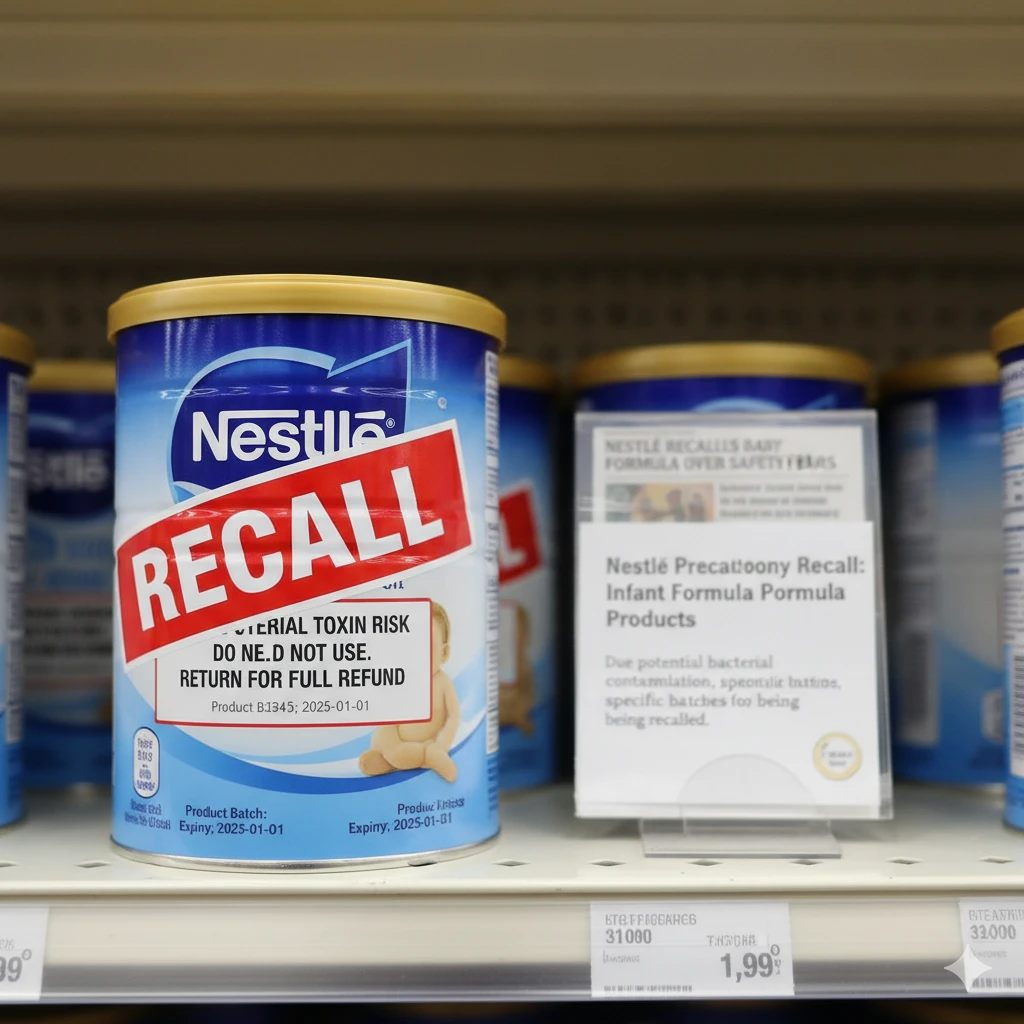
Nestlé Announces Precautionary Recall of Certain Infant Formula Products Over Potential Contamination
Nestlé, the global food company, has announced a voluntary and precautionary recall of specific batches of infant formula in several markets after detecting a potential risk of contamination with cereulide, a toxic substance produced by the bacterium Bacillus cereus, which may pose a health risk to infants.
Products Included in the Recall
The company stated that the recall affects a number of its leading infant nutrition brands, including:
Health Warnings from Regulatory Authorities
In a strong warning, the UK Food Standards Agency emphasized that cereulide is highly heat-stable, meaning that boiling water or heating the formula does not neutralize the toxin or eliminate the risk, even when preparation instructions are properly followed.
Meanwhile, the Saudi Food and Drug Authority (SFDA) noted that symptoms of cereulide poisoning may appear rapidly and include severe nausea, repeated vomiting, and intense abdominal cramps and pain.
Precautionary Recall and Consumer Reassurance
In a statement to consumers, Nestlé stressed that the recall was initiated “out of an abundance of caution” and in line with its strict quality and safety protocols. The company confirmed that no illnesses have been reported in connection with the affected products at the time of the announcement.
In the United Kingdom and Ireland, Nestlé has set up dedicated customer support channels to allow consumers to obtain refunds for the affected products. In Saudi Arabia, the SFDA has urged consumers to immediately dispose of any products bearing the announced batch codes, confirming close coordination with the company to ensure the removal of all affected quantities from local markets.
Additionally, Egypt’s National Food Safety Authority announced the implementation of a precautionary recall for a limited number of infant formula batches produced by Nestlé, following an official notification from Nestlé Egypt regarding the voluntary recall.
Advice to Check Batch Codes
Regulatory authorities have urged parents and caregivers to review the published batch codes on the official websites of Nestlé and the relevant authorities to confirm whether their products are affected. Consumers are also encouraged to report any affected products found in retail outlets through official consumer complaint channels.