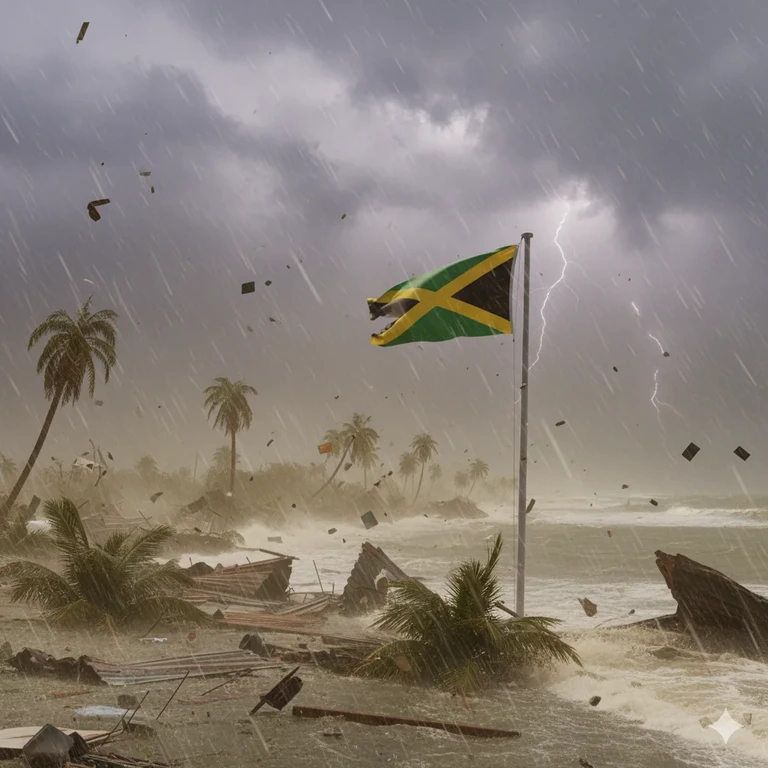
Hurricane Melissa claimed the lives of three people in Jamaica before making landfall on Tuesday, bringing winds reaching 280 kilometers per hour and raising fears of catastrophic floods and landslides.
The hurricane, classified as a Category 5 storm—the highest on the hurricane intensity scale—also killed three people in Haiti and one person in the Dominican Republic. It is expected to strengthen further before striking Jamaica’s mainland, accompanied by torrential rain and a dangerous rise in sea levels.
The U.S. National Hurricane Center warned of “life-threatening” storm surges that could cause destruction similar to that of Hurricanes Maria (2017) in Puerto Rico and Katrina (2005) in New Orleans.
Jamaican authorities said the three victims were preparing for the storm when they were struck by strong winds while cutting tree branches. If Melissa maintains its strength, it could become the most powerful hurricane ever recorded in Jamaica’s history.
Prime Minister Andrew Holness warned that the hurricane could cause massive damage, particularly in the western part of the country, stating that “no facility in that region can withstand a Category 5 hurricane.” He urged residents to evacuate high-risk areas, noting that the government had allocated $33 million in emergency funds, in addition to insurance and credit provisions for expected losses.
However, many residents refused to evacuate. Jennifer Ramdeal, a fisherwoman from the coastal town of Port Royal near Kingston, told AFP: “I simply don’t want to leave.” Around 60 people have taken refuge in a primary school in St. Thomas in eastern Jamaica, while 881 shelters have been opened across the island, which has a population of 2.8 million.
According to Michael Brennan, director of the U.S. National Hurricane Center, coastal areas in Jamaica could see water levels rise up to four meters, posing a major flood threat along the southern coast, accompanied by intense rainfall inland.
Esther Pinnock, communications officer for the Jamaican Red Cross, said that heavy rain and strong winds have already begun, warning that “the situation is worsening by the hour.”
Concerns are growing because the hurricane is moving very slowly—at just 4 kilometers per hour—which could prolong the impact. Moreover, the soil is already saturated from previous rainfall, increasing the risk of landslides.
Climate scientist Daniel Guilford noted that climate change is intensifying the most dangerous aspects of Hurricane Melissa, such as heavier rainfall and stronger coastal flooding.
The last major hurricane to strike Jamaica was Hurricane Gilbert in September 1988, which killed 40 people and caused severe damage.
Jamaican authorities have closed ports and the international airport, while Cuban officials began closing schools and evacuating residents ahead of the storm’s arrival. The hurricane is expected to reach Cuba on Wednesday morning, before moving toward the southern Bahamas and the Turks and Caicos Islands.