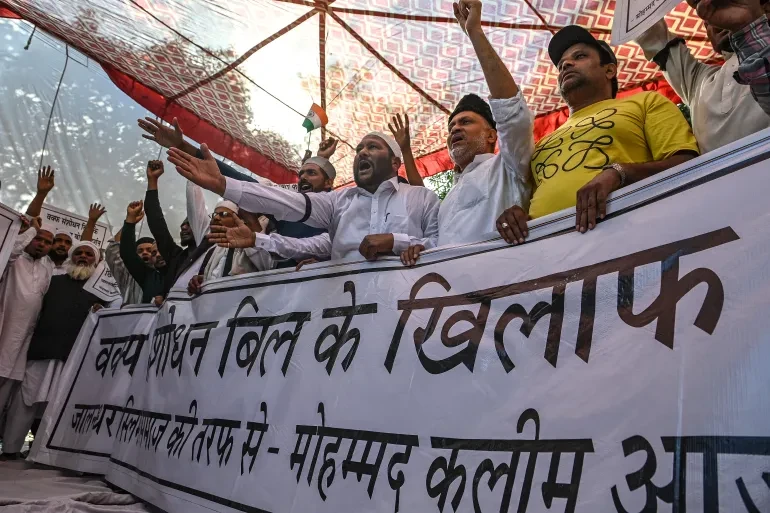
A report published by The Independent revealed that India witnessed a sharp and unprecedented rise in hate speech and calls for violence against religious minorities in 2025, especially Muslims and Christians. The report is based on a study conducted by the India Hate Lab, a project of the Center for the Study of Organized Hate in Washington.
According to the study, this surge was closely linked to military tensions between India and Pakistan, as periods of external crisis are often used to justify targeting minorities at home. More than 1,300 hate-related incidents were documented nationwide, averaging nearly four incidents per day. This represents a 13% increase compared to 2024 and almost double the number recorded in 2023.
The report found that around one-quarter of the recorded speeches contained explicit calls for violence against Muslims, while more than 130 incidents included direct appeals to take up arms. In addition, over 270 speeches called for the removal or destruction of mosques, and at least 120 urged economic and social boycotts of minority communities.
A clear spike in hate speech was observed following the attack on the village of Pahalgam in Kashmir and in the period leading up to confrontations between India and Pakistan. Within just 16 days, between April 22 and May 7, researchers recorded 98 face-to-face hate incidents, describing them as a coordinated mobilization against Muslims in the context of rising tensions with Pakistan.
The report highlighted the role of the political environment in fueling hate speech, noting that approximately 88% of the incidents occurred in states governed by the Bharatiya Janata Party (BJP), led by Prime Minister Narendra Modi. Uttar Pradesh recorded the highest number of incidents, followed by Maharashtra, Madhya Pradesh, Uttarakhand, and the capital, New Delhi.
It also pointed to the involvement of organized Hindu nationalist groups and religious leaders in a significant share of the incidents, often in the presence of or under the protection of police. Nearly half of the hate speeches relied on far-right conspiracy theories portraying Muslims as a demographic and political threat to India.
Regarding Christians, the report documented a noticeable increase in attacks, particularly ahead of Christmas, including church vandalism, disruptions of prayers, and harassment of worshippers. Despite making up about 2.35% of the population, Christians faced growing restrictions, including decisions in some states to keep schools open on Christmas Day.
The report concluded by warning about the role of social media in amplifying hate speech, noting that most of the content was first shared on Facebook before spreading to YouTube, Instagram, and X, while platforms largely failed to enforce their hate-speech policies.