Latest1O1
Latest1O1
  • Home
  • Blog
🌌 Historic Discovery: Astronomers Spot the First "Infant Planet" Shaping Its Birthplace
Hellokity |
12 Sep 2025

🌌 Historic Discovery: Astronomers Spot the First "Infant Planet" Shaping Its Birthplace

Space
Join us on Telegram

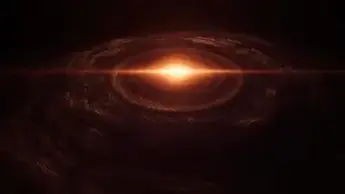
In a groundbreaking achievement, an international team of astronomers has announced the first direct evidence of a “baby planet” carving vast gaps in the dusty disk surrounding a newborn star. The discovery, named WISPIT-2b, marks a turning point in our understanding of how planets form—an enduring scientific debate for decades.

Why Is This Important?

For years, scientists have suspected that the gaps seen in protoplanetary disks are created by emerging planets. Until now, however, no one had provided conclusive proof. With WISPIT-2b, astronomers finally have direct confirmation that infant planets can sculpt these gaps.

Inside the New System

  • Host star: TYC-5709-354-1 (or WISPIT-2), a young, Sun-like star

  • Distance from Earth: 434 light-years

  • The infant planet: WISPIT-2b, a gas giant about five times the mass of Jupiter

  • Location: Orbiting at 54 astronomical units (AU), inside a massive cavity of gas and dust

How Was It Detected?

Researchers used a cutting-edge instrument called MagAO-X, mounted on the Magellan Telescope in Chile, to capture the unique H-alpha emission produced as hydrogen gas falls onto the forming planet. These observations were combined with data from the Very Large Telescope (VLT) at the European Southern Observatory for confirmation.

A Glimpse Into the Past

This rare finding offers a window into what our own Solar System may have looked like in its earliest days, when the young Sun was still surrounded by dusty disks that eventually gave birth to planets and asteroids.

The results were published in two papers in The Astrophysical Journal Letters, opening the door to a new era of planetary formation research.


 

#Breaking_News #latest101 #technology

Related Posts

A New World of Hope: “GJ 251c” Could Be Earth’s Closest Twin

A New World of Hope: “GJ 251c” Could Be Earth’s Closest Twin

Hellokity
2025 Oct 26

In a groundbreaking astronomical discovery that reignites humanity’s dream of finding life beyond our planet, scientists have identified a new Earth-like world — one …

NASA’s Perseverance Rover Uncovers Possible Signs of Ancient Life on Mars

NASA’s Perseverance Rover Uncovers Possible Signs of Ancient Life on Mars

Wookawooka
2025 Sep 11

A rock sample from Jezero Crater may hold signs of past microbial life, though further study is needed. Plans to return the samples face …

The Largest Galaxy Cluster Catalog in History Maps the Dark Universe

The Largest Galaxy Cluster Catalog in History Maps the Dark Universe

Hellokity
2025 Oct 29

In a monumental astronomical achievement, an international team of scientists has compiled the largest catalog of galaxy clusters ever, using data from the Dark …

A Spectacular Winter Sky Show: Jupiter Shines at Its Brightest

A Spectacular Winter Sky Show: Jupiter Shines at Its Brightest

Hellokity
2026 Jan 11

This week, the winter sky offers one of the most stunning astronomical sights of 2026, as Jupiter reaches opposition, appearing brighter and clearer throughout …

5 Planetary Nebulae That Captivate the Eye and Tell the Story of Dying Stars

5 Planetary Nebulae That Captivate the Eye and Tell the Story of …

Hellokity
2026 Feb 08

Not every cloud in the sky is a fleeting mist. Some are the final traces of stars much like our Sun, whose last moments …

🌕 Ancient Human Civilization on the Moon 50,000 Years Ago? NASA Faces New Claims

🌕 Ancient Human Civilization on the Moon 50,000 Years Ago? NASA Faces …

Hellokity
2025 Oct 07

For decades, the Moon has fascinated scientists — some see it as a silent rock orbiting Earth, while others believe it hides forgotten secrets …

We'd Love to Hear from You!

All rights reserved ©Latest1O1|Privacy & Policy
created by Libya Digital Wizard |