Washington – In less than a year since returning to the White House for a second term, U.S. President Donald Trump has carried out military operations in six countries across the Middle East and Africa: Iran, Nigeria, Yemen, Iraq, Syria, and Somalia.
More recently, the reach of the Trump administration extended into the Western Hemisphere following a military operation in which U.S. special forces arrested Venezuelan President Nicolás Maduro and his wife, transferring them to New York to stand trial before a federal court on charges of “narco-terrorism.”
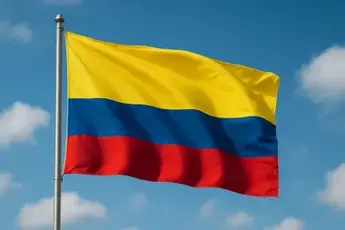
These developments came as a major surprise, particularly given that Trump has consistently criticized what he calls America’s “endless wars” since launching his political career during the 2016 presidential campaign. He has repeatedly rejected “nation-building” efforts—policies pursued unsuccessfully by both Republican and Democratic presidents, including George W. Bush and Barack Obama in Iraq and Afghanistan. Despite this stance, Trump moved to remove the head of Venezuela’s regime and has threatened to do the same in Cuba and Colombia.
Trump’s Justifications
Hours after Maduro’s arrest, Trump announced that the United States would temporarily administer Venezuela and rebuild its oil industry. At the same time, he lashed out at Colombian President Gustavo Petro, warning that his “days are numbered,” and suggested that Cuba’s ruling system was nearing collapse.
In a separate interview with Fox News, Trump expressed frustration with Mexican President Claudia Sheinbaum’s approach to combating drug cartels, claiming they effectively “run” the country. “Something has to be done about Mexico,” he said.
Since September, the Trump administration’s justification for escalating pressure on Caracas has evolved. It initially focused on combating drug trafficking, then shifted to reclaiming oil resources Trump claims were stolen from U.S. companies, followed by calls to overthrow an “authoritarian” government in the name of democracy. Ultimately, Trump approved a regime-change operation in Venezuela in his capacity as commander-in-chief—without congressional approval or notification.
Potential Internal Turmoil
Jennifer Kavanagh, Director of Military Analysis at the Defense Priorities Initiative, echoed these concerns, warning that widespread internal unrest is the most likely outcome. She noted that “U.S. military interventions and regime-change efforts have historically strayed from their objectives, often resulting in political conflict, civil wars, and economic disasters.”
Kavanagh added that Trump’s statements about governing Venezuela and rebuilding its oil infrastructure—without outlining concrete plans—suggest the administration lacks a clear strategy for either task.
When asked about America’s disastrous track record of toppling dictators without plans for what follows, Trump offered vague and inconsistent answers, citing the killing of Iranian Quds Force commander Qassem Soleimani and former ISIS leader Abu Bakr al-Baghdadi, without addressing Venezuela’s future.
Experts emphasize that Maduro led a deeply rooted political, social, and economic system in a country of nearly 30 million people, and that his arrest alone does not dismantle those structures.
At the same time, analysts fear the fragmentation of the Venezuelan military, the expansion of criminal gangs and organized crime, the outbreak of civil war, or the emergence of an even more authoritarian regime. These risks are heightened by Venezuela’s proximity to the United States and its direct connection to migration and drug-trafficking issues.
Trump is also aware that restructuring Venezuela’s political system would require a large-scale ground invasion—an option he has so far rejected, as has his “America First” electoral base.
Trump’s Agenda
In this context, David Des Roches, a former White House and Pentagon official, said he does not believe Trump is seeking regime change in the Western Hemisphere through direct military force. Instead, he argues that Trump’s preferred tools remain economic, particularly the expansion of sanctions against governments Washington deems hostile.
Des Roches noted that Trump’s actions are often driven by two agendas: policy and revenge. Some measures, he suggested, may reflect retaliatory motives. While Trump has not explicitly stated this, a theory circulating among some of his allies claims that the Maduro regime indirectly controls companies that manufacture voting machines used worldwide. These companies are alleged—through a network of shell corporations—to have manipulated vote counts in key U.S. districts, most notably in Georgia, preventing Trump from winning the 2020 election.
On the policy front, Des Roches explained that domestic political considerations strongly motivate Trump’s stance toward Maduro. During the 2024 campaign, illegal immigration and Latin American criminal gangs became central issues for Trump. He and Vice President J.D. Vance frequently highlighted images of the Venezuelan gang Tren de Aragua taking over residential complexes in Denver, Colorado.
Trump’s hardline approach to illegal immigration—and actions against Maduro—reinforce what is arguably his most powerful domestic political message.
From a strategic perspective, Des Roches added that Trump views Caracas as a key supplier of oil to Nicaragua and Cuba, both of which Washington considers hostile actors in the Western Hemisphere. Removing Maduro would weaken these governments and make regime change easier without direct U.S. military involvement—aligning with Trump’s primary strategic objective.